Historical Restoration and Layout
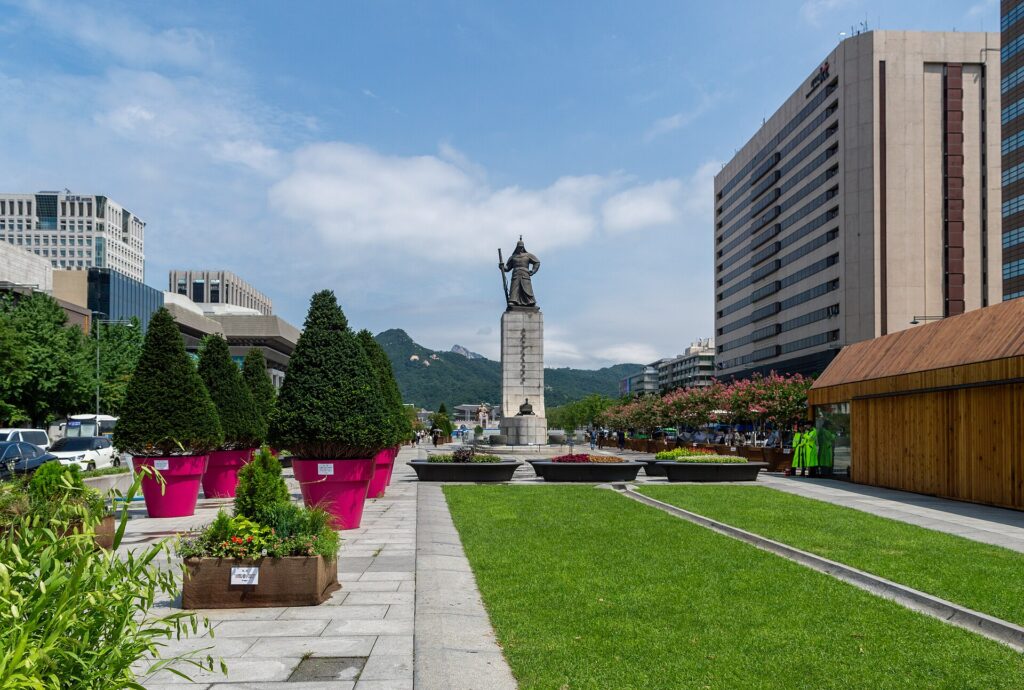
Gwanghwamun Plaza is centered around Sejong-ro, a main street in Seoul with six hundred years of history. The design aims to provide an open public space for historical and cultural experiences inspired by the restoration of the old Yukjo Street. Traces of this historic thoroughfare were restored near Sejong-ro Park, where a scale model was installed to recreate the scenery. Additionally, Woldae, an elevated ceremonial stage, was reconstructed at the entrance of the area designated as "The Space that Recovers the History of Gwanghwamun." The plaza also features the restoration of the statue of Haetae, an imaginary animal that judges good and evil.
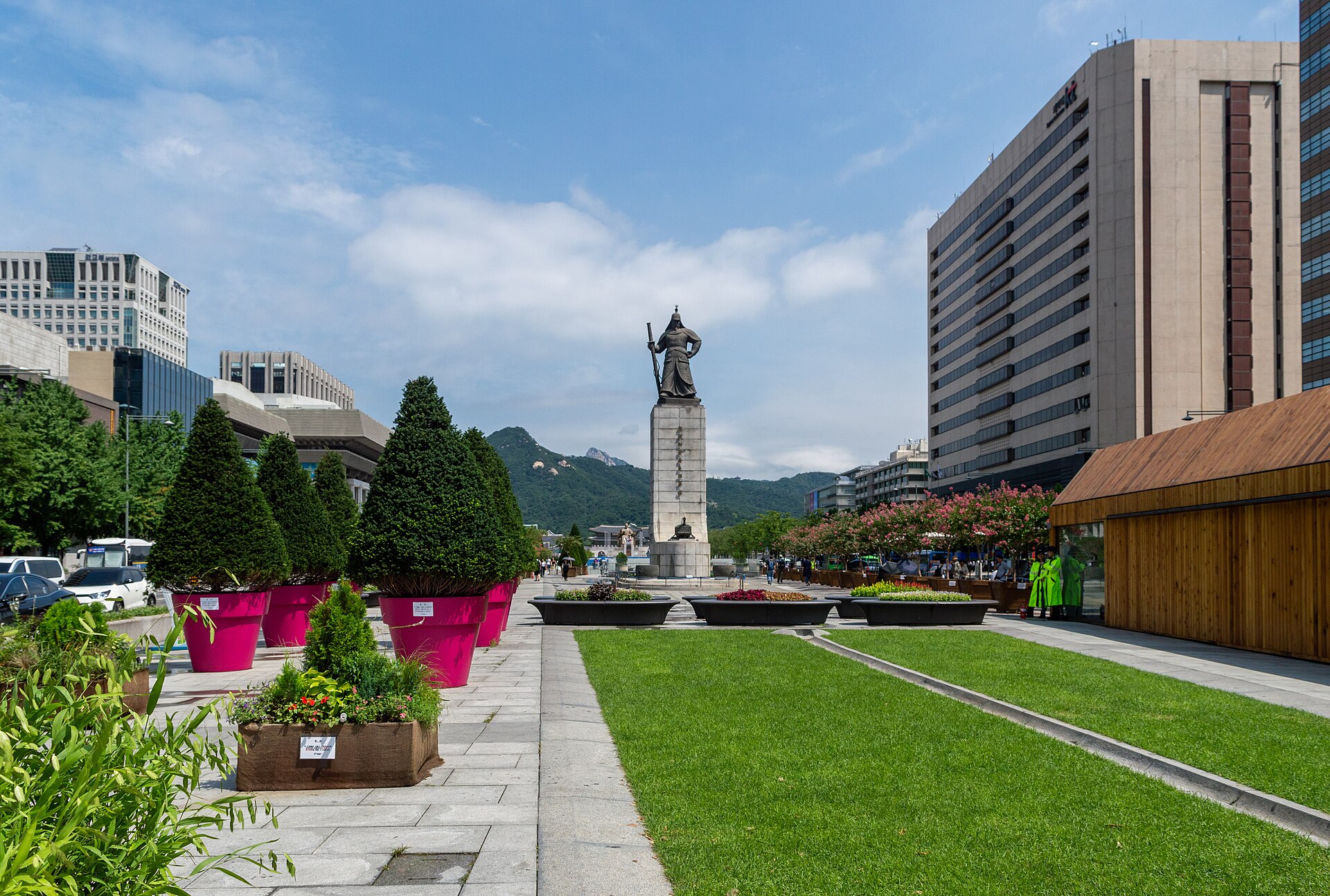
Photo: Tristan Surtel · CC BY-SA 4.0

Key Installations and Statues
Gwanghwamun Plaza features a variety of installations designed to blend modern public amenities with historical symbolism. The space includes a central square, a flower carpet, and an impressive fountain, alongside a Haechi yard and a gift shop. A key focal point is the statue of King Sejong the Great. Additionally, a restored statue of Haetae, an imaginary animal that judges good and evil, has been placed within the plaza. The area also includes a Woldae (Elevated Ceremonial Stage) reconstructed at the entrance of the “The Space that Recovers the History of Gwanghwamun.” Near Sejong-ro Park, traces of Yukjo Street, the main street of Hanyang in the past, were restored in the “Space that recreates the scenery of Yukjo Street,” where a scale model is installed. The plaza also offers rest spaces under tall pine trees and features a media window at the Haetae Lounge for learning about the square's history.
Accessibility and Transit Options
Gwanghwamun Plaza is accessible via multiple Seoul Subway lines, offering convenient connections for visitors. The most direct route is Line 5 at Gwanghwamun Station; Exit 2 provides immediate access to the plaza area. For those using Line 1, Jonggak Station (Exit 1) requires a walk of approximately 450 meters straight ahead, with the plaza appearing on the right side upon arrival. Travelers arriving via Line 3 can use Gyeongbokgung Station (Exit 6), which is located about 260 meters away in the direction of the palace. The site operates 24 hours a day and does not charge admission fees.
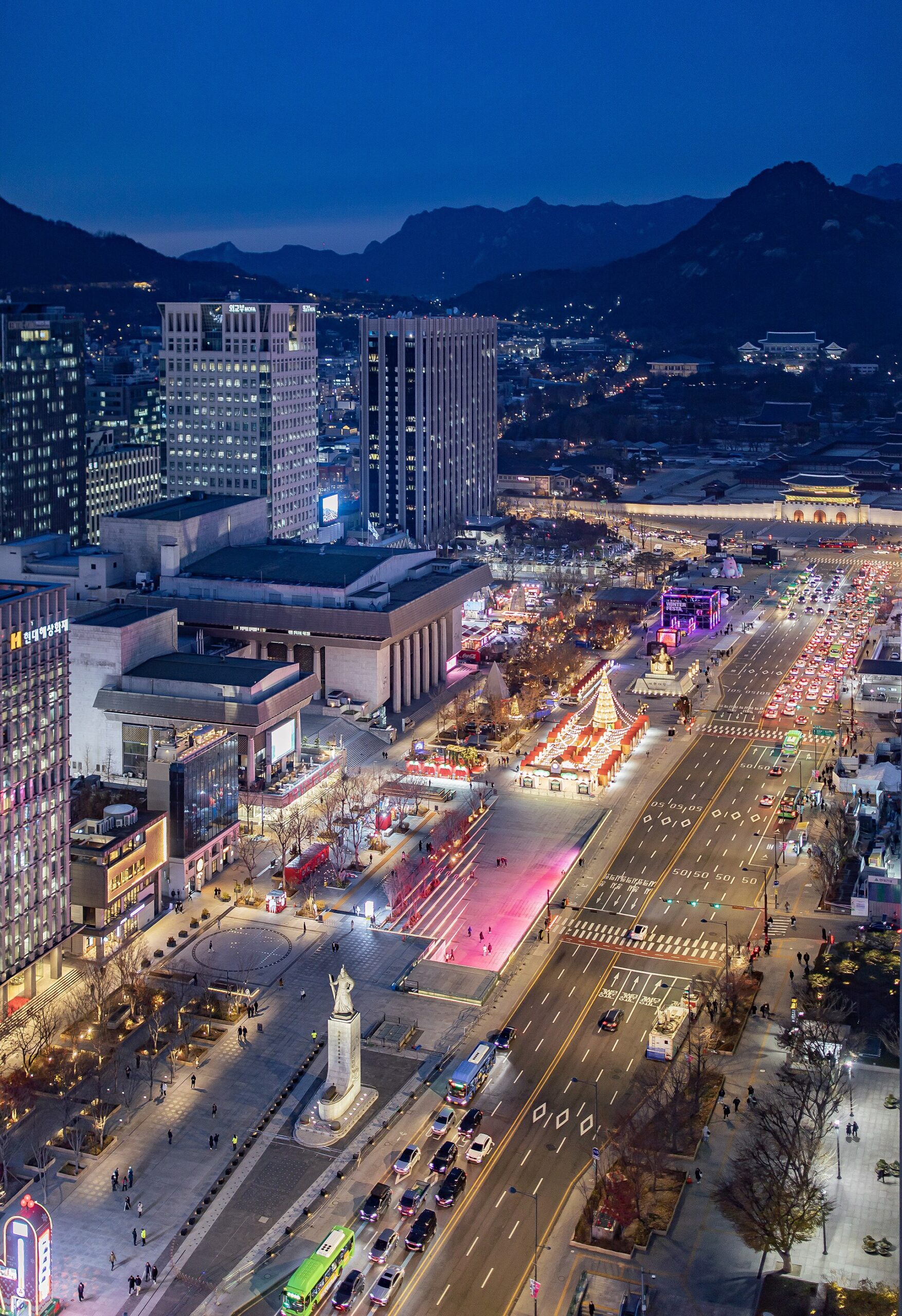
Photo: Seoul Tourism Organization · KOGL Type 1

Operating Hours and Facilities
Gwanghwamun Plaza operates twenty-four hours a day with no admission fees required. The address is listed as 172 Sejong-daero, Jongno-gu, Seoul. Visitors can access the plaza via Line 5 of the Seoul Subway at Gwanghwamun Station (Exit 2), or by walking approximately 450 meters from Jonggak Station on Line 1 and 260 meters from Gyeongbokgung Station on Line 3. Amenities include restrooms, a gift shop, and a central square featuring a fountain and flower carpet. The plaza features tall pine trees with multiple resting spaces underneath, allowing visitors to relax while enjoying the views of Bukaksan Mountain. It also includes a Haechi yard and historical road elements.
Educational Features and Practical Tips
Gwanghwamun Plaza serves as an open public space for historical and cultural experiences, centered around Sejong-ro. The area features several educational installations designed to illustrate the site's heritage. A key feature is the "Space that Recovers the History of Gwanghwamun," which includes a reconstructed Woldae (Elevated Ceremonial Stage) at its entrance. This space also displays a restored statue of Haetae, an imaginary animal traditionally believed to judge good and evil. Additionally, near Sejong-ro Park, visitors can explore the "Space that recreates the scenery of Yukjo Street," where traces of this former main street of Hanyang are preserved alongside a scale model.
For practical access, the plaza is open 24 hours a day with no admission fees. Public transport options include Seoul Subway Line 5 to Gwanghwamun Station (Exit 2), which provides direct access to the square. Alternatively, Line 1 to Jonggak Station (Exit 1) requires a 450-meter walk straight ahead, while Line 3 to Gyeongbokgung Station (Exit 6) involves a 260-meter walk toward Gyeongbokgung Palace. The plaza offers rest areas under tall pine trees and facilities such as a central square, flower carpet, fountain, and gift shop. For those seeking deeper context, the Haechi Lounge area features a media window to explore the history and significance of the plaza.