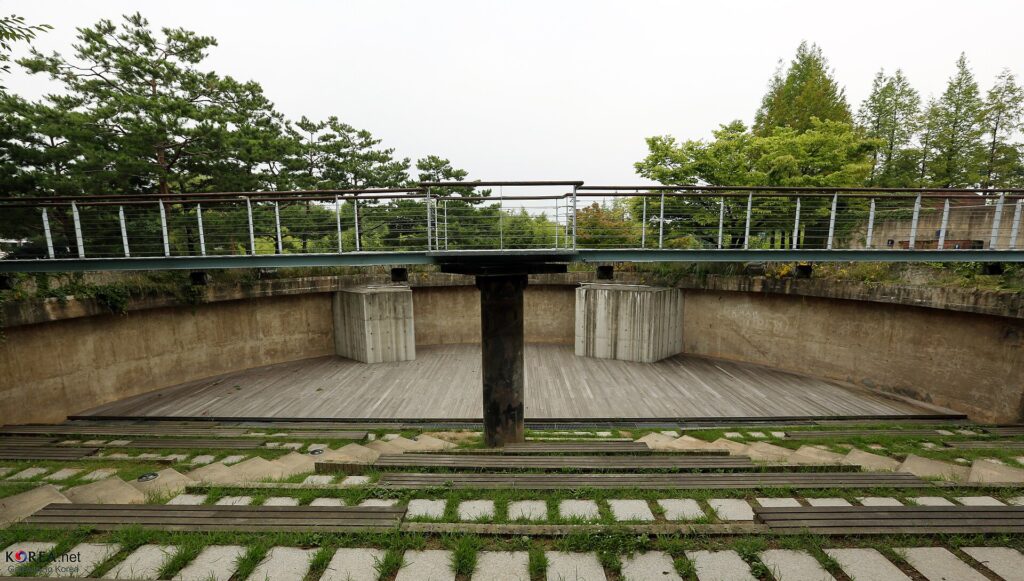
Seonyudo rewards a different kind of walk from a riverside lawn. Its former filtration structures are part of the attraction, not background to hide from photographs. Plan a visit around the contrast between concrete, planting, and open space, while keeping the trip onto the island separate from the time you want to spend there.
Include the approach in your available time
The official tourism listing places the park at 343 Seonyu-ro and names Line 9’s Seonyudo Station as an approach. The shared name does not mean the station exit is the park gate. Check the walking route to the actual entrance, especially if someone is meeting you from another direction along the river.
If your next appointment is fixed, decide when you need to leave the island before choosing how far to explore. Keep the current map and on-site signs as your navigation source. An old photograph of a bridge or path can explain a landscape, but cannot establish that the same access is available today.
Read the walls before looking for flowers
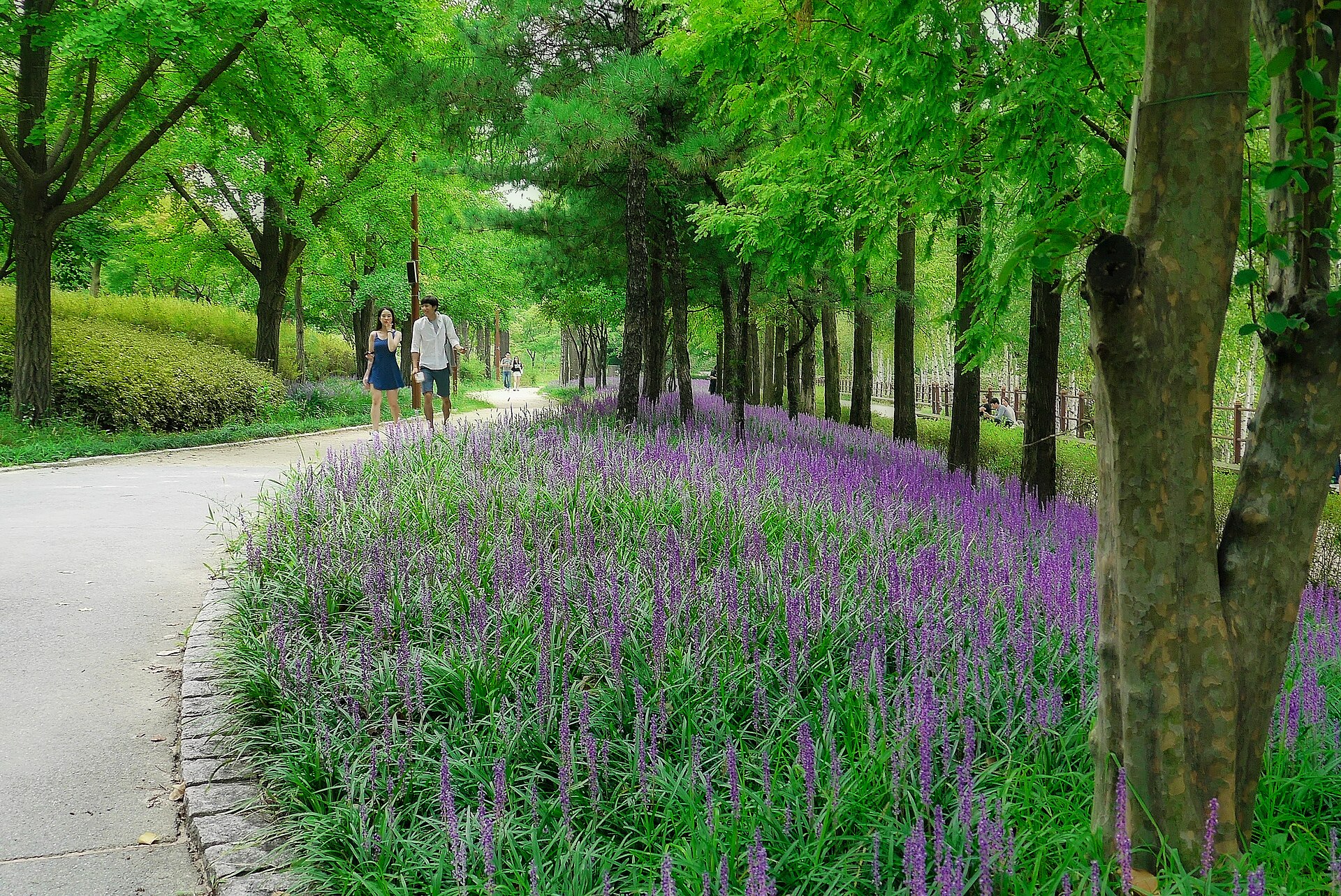
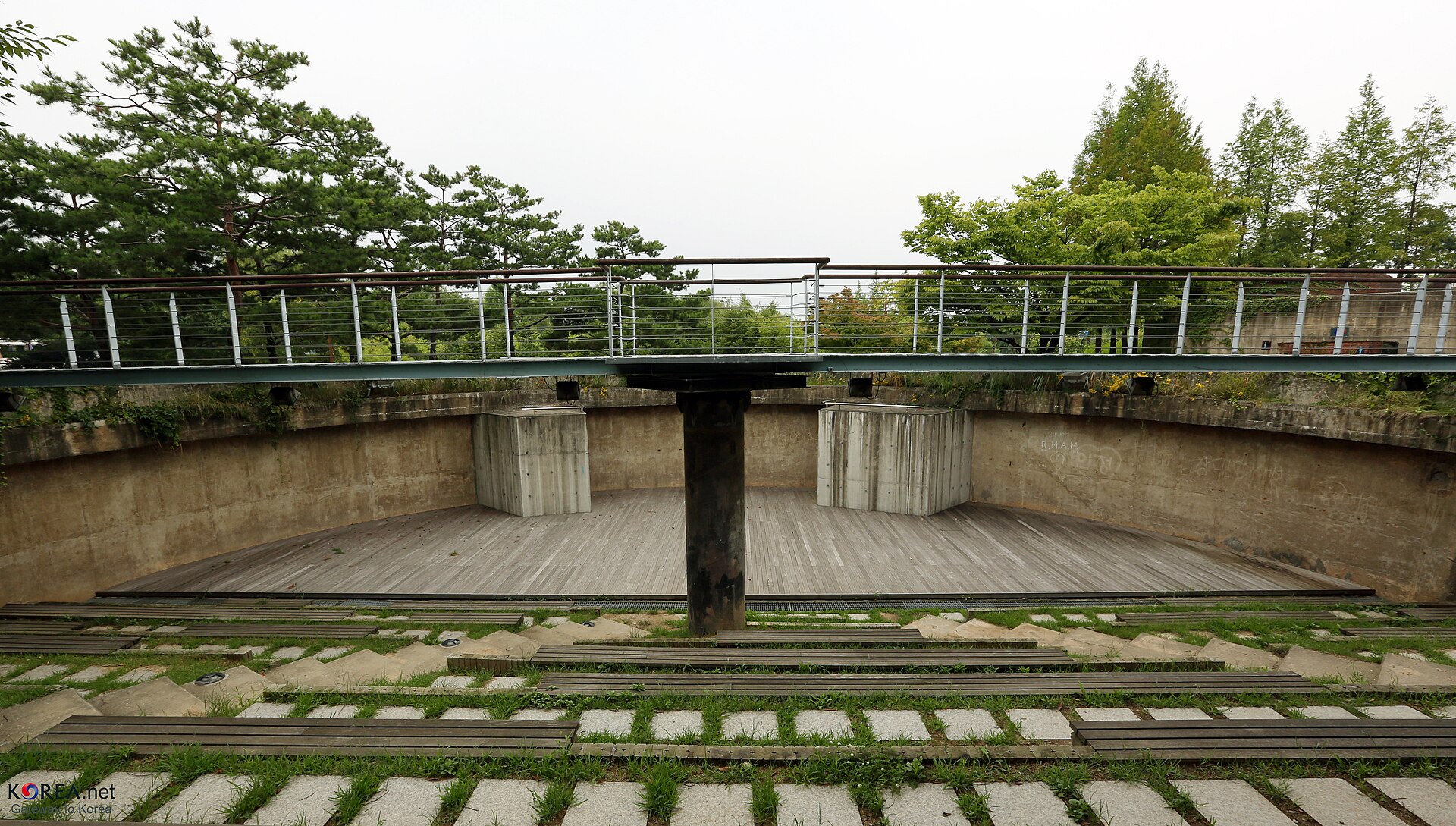
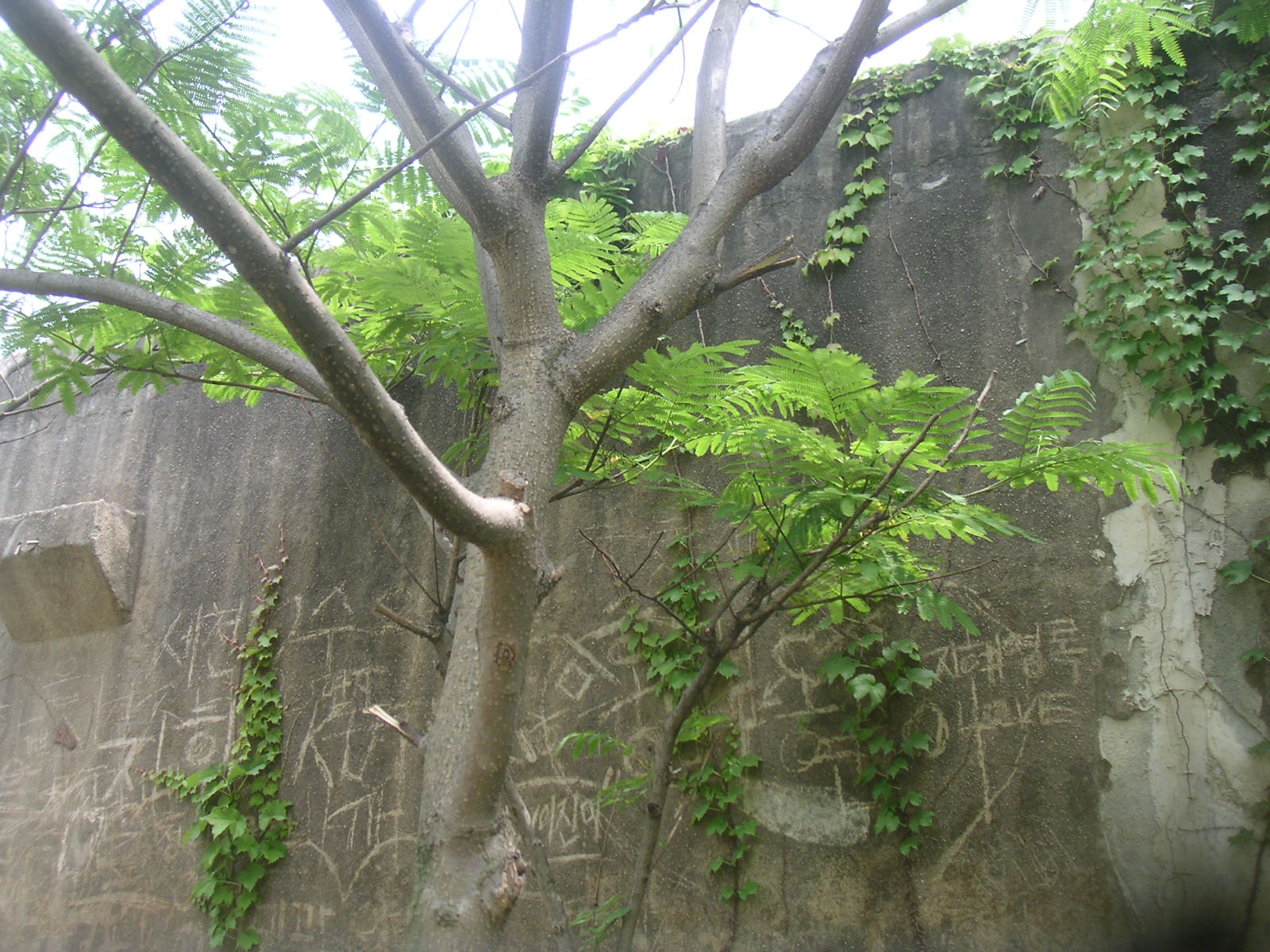
The city describes Seonyudo as an ecological park adapted from a water-treatment facility. Preserved structures make its design different from a garden built on an empty plot. Look at changes in level, the edges of former enclosures, and where vegetation meets an existing wall. Those relationships remain useful things to notice even when a particular flower is not in bloom.
Try making two photographs of one space: a wide view showing its boundaries, then a closer view of a material or plant. Compare what each reveals. This is an observation exercise, not a designated photography course, and it does not require entering planting beds or a closed section.
Compare two spaces instead of collecting every stop
For a shorter visit, choose an enclosed space and a more open one. Notice how far you can see, where shade falls, and whether you instinctively slow down. A garden becomes easier to remember when you can describe a specific difference rather than merely recall that it was green.
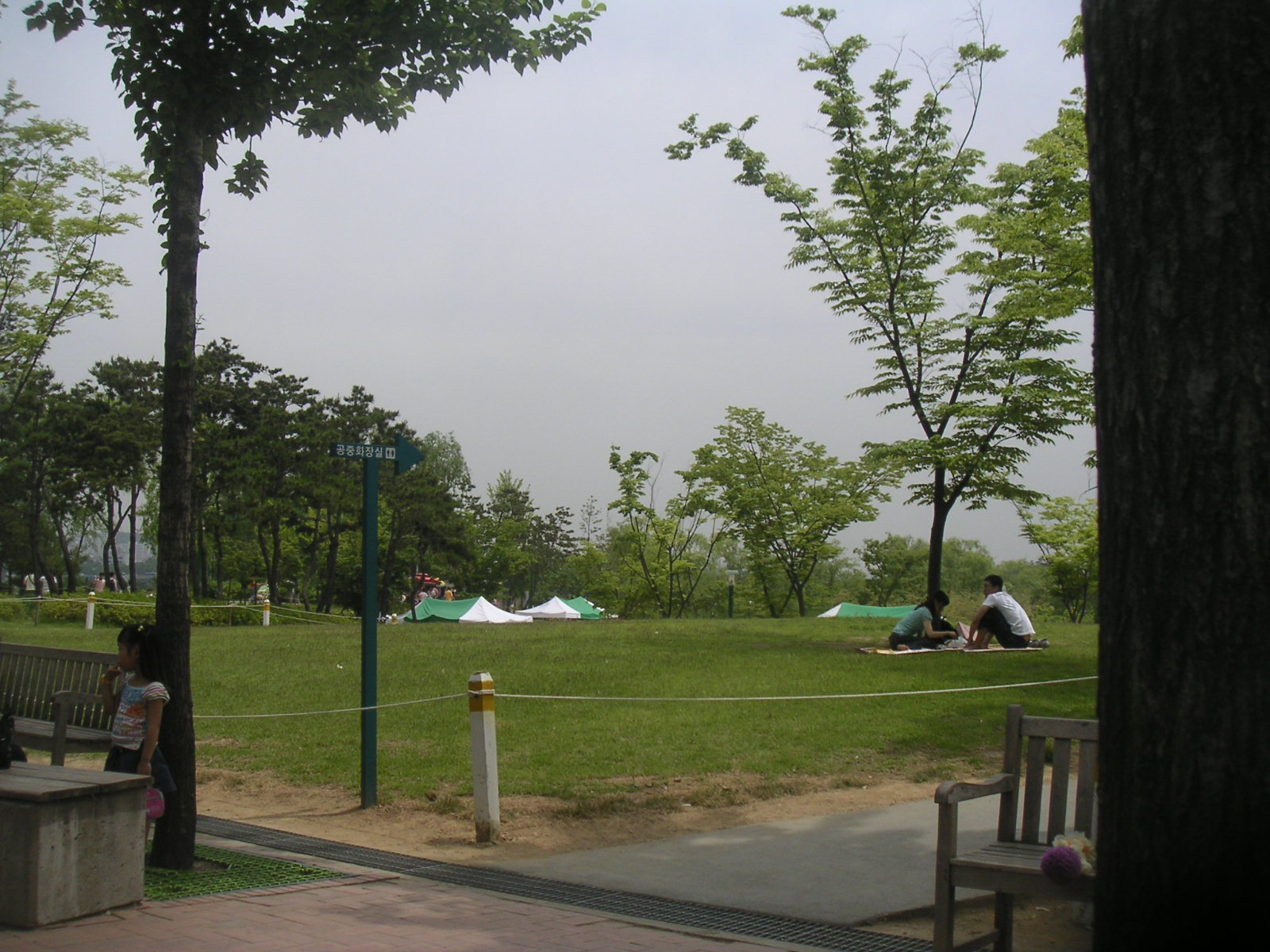
Some images in this article are archival, including photographs from 2005 and 2014. They illustrate the reuse of structures and the character of the landscape; they are deliberately not presented as a report on today’s planting or maintenance. If you want a particular seasonal display, look for a current announcement rather than trying to reproduce an old image exactly.
Do not confuse park hours with exhibition hours
Visit Seoul lists the outdoor park from 06:00 to midnight, with separate hours and a Monday closure for its exhibition hall. If indoor interpretation is essential to your visit, check that facility first and arrange the walk around it. A late outdoor visit and a visit to an exhibition are different plans.
For an evening walk, identify your return route before it gets dark and check weather or access notices. Do not rely on general park photographs to establish parking availability. The most satisfying use of a limited visit is to leave with one thing you noticed about the conversion from infrastructure to garden, rather than a hurried list of every corner you passed.
Before you go
Search for 선유도공원, Yeongdeungpo-gu, Seoul. This is Seoul’s river-island park, not another Korean destination named Seonyudo. Visitor information checked on 27 September 2026.