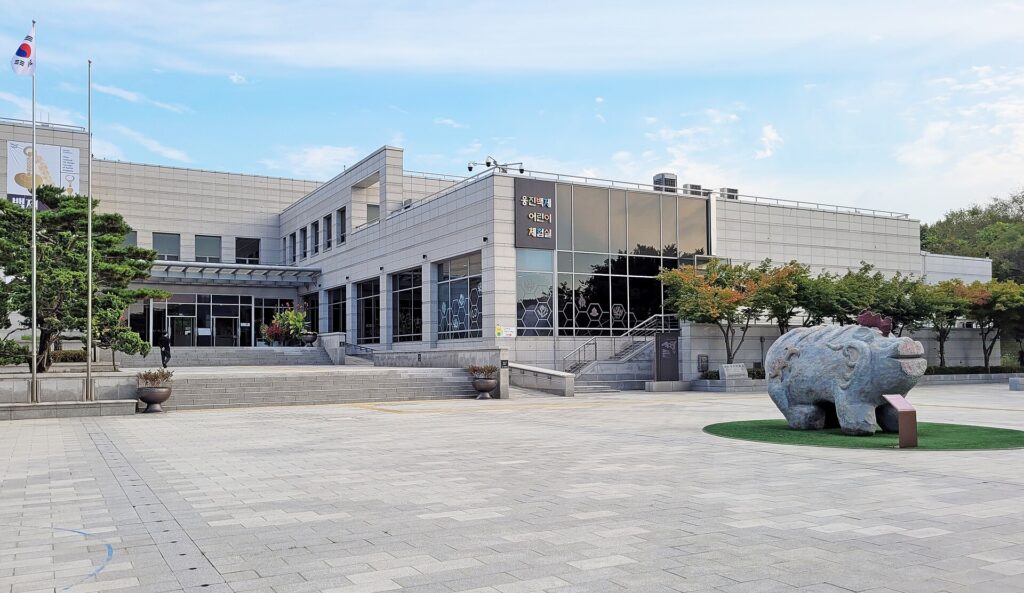
At Gongju National Museum, the most useful starting point is a question: how do archaeologists know who was buried in a tomb? The objects from King Muryeong’s burial give you a way to follow evidence, protection and ceremony through one exhibition. That makes a more memorable visit than trying to remember every treasure number.
The museum and the royal tomb site are separate destinations. Use the museum for the excavated objects and their interpretation; check the tomb site’s own visitor information if you want to add it to the day. Do not navigate to a generic “Muryeong tomb” result when you mean the museum.
Start with the identity, then look at the gold
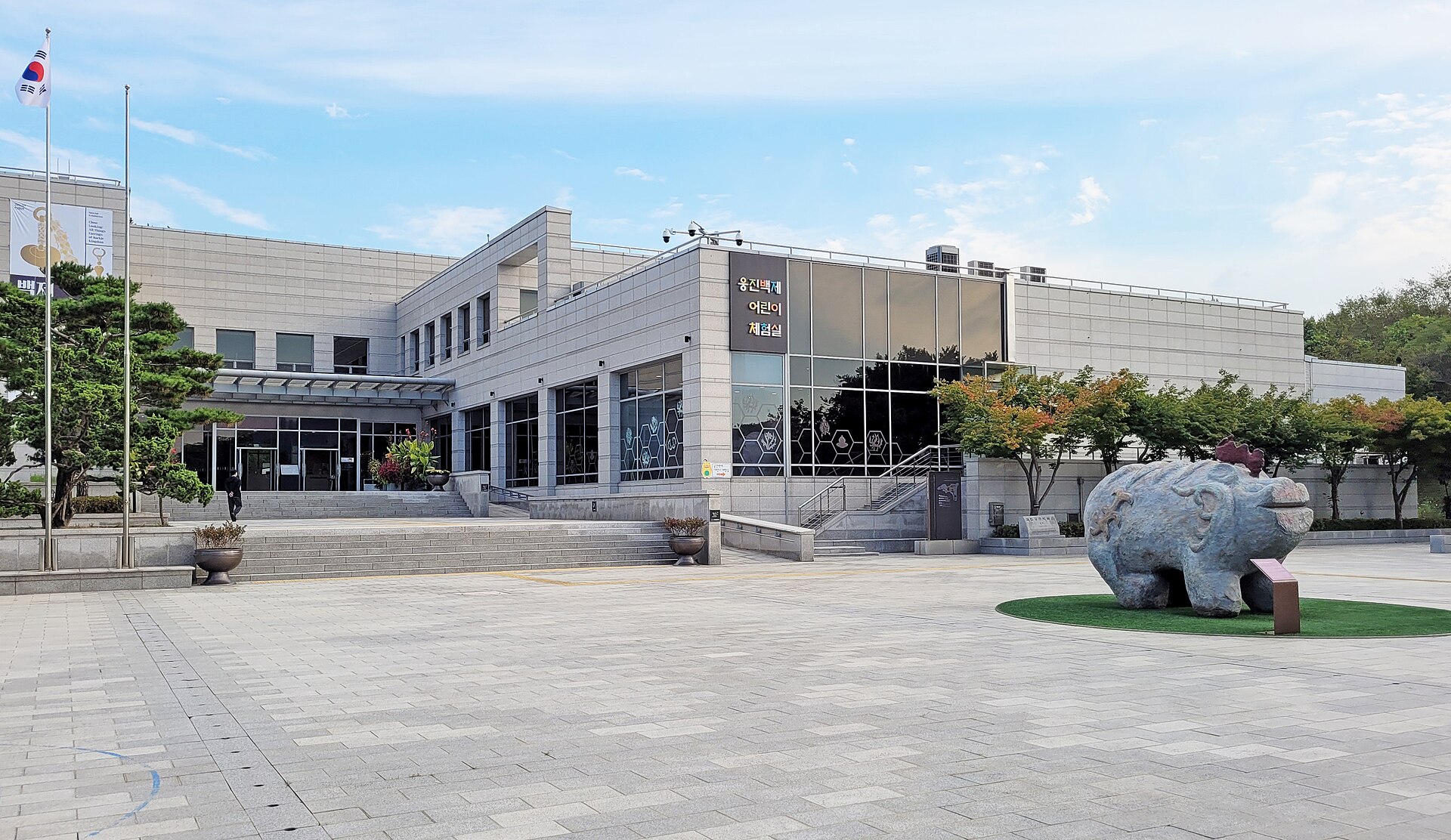
The first-floor Ungjin Baekje Hall focuses on the tomb of King Muryeong, Baekje’s 25th king. The museum explains that inscribed stone plaques identify the royal burial. Read the plaque interpretation before moving to the ornaments: it changes the visit from looking at unidentified luxury objects to thinking about a named king and queen.
A useful note to take is not a copied list of dates, but one sentence answering “What did the inscription establish?” Then compare that with what the objects can tell you by their appearance alone. A beautiful object and an object that preserves written evidence do different jobs in a museum story.
Read the guardian as part of the tomb
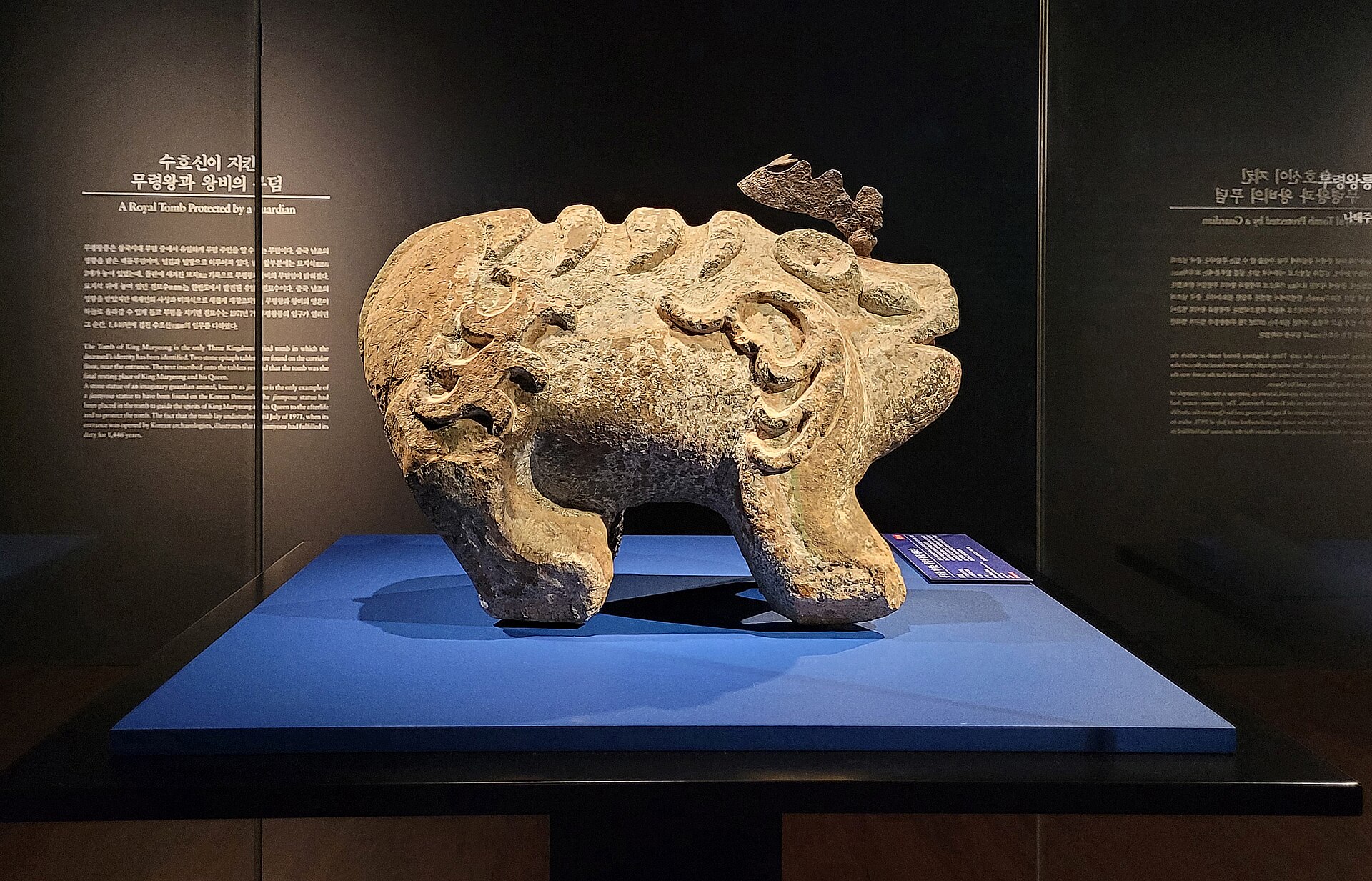
The stone guardian, or jinmyosu, combines a horn and wings with a compact animal body. The museum describes its role in protecting the tomb and guiding the deceased. Look for those features before reading the explanation; the figure becomes easier to remember when you connect its shape with its purpose.
Our suggested viewing question is “Where did this belong?” A guardian placed along an approach has a different role from jewelry worn by the deceased. Thinking about location helps you connect individual cases without inventing a story about what the people buried there personally believed.
Use the coffin display to understand the arrangement
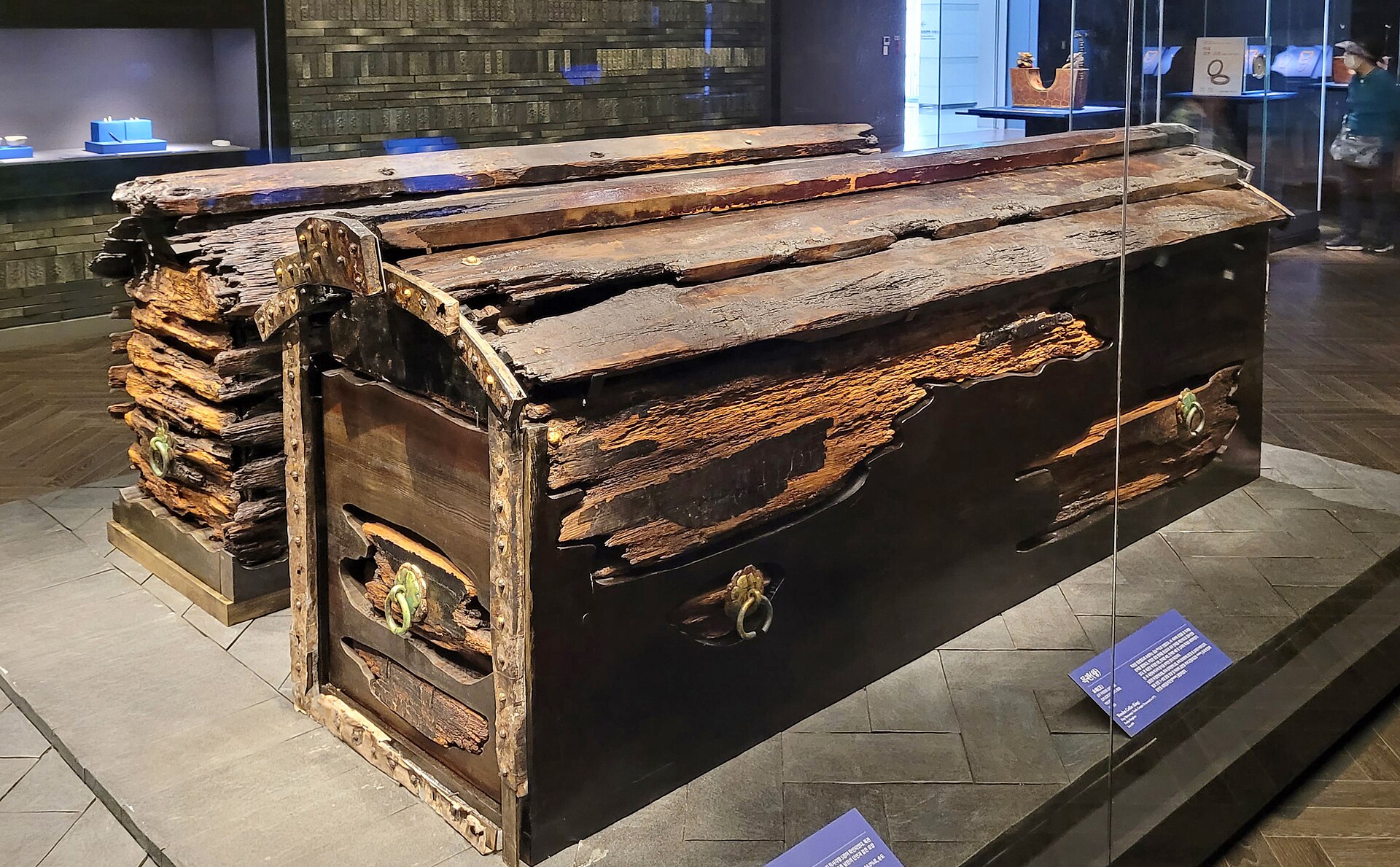
The museum’s facility description explains that the exhibition uses a case matching the tomb chamber’s floor dimensions, with objects arranged to evoke their original positions. Stand back far enough to read that spatial relationship before concentrating on a single artifact. The point is to understand the burial arrangement, not simply to find the most photogenic case.
If you still have time and attention, the second-floor regional history gallery broadens the subject beyond this royal burial. If the tomb story was your main reason for coming, it is also reasonable to finish with a careful look at one object you initially rushed past. These are choices about your visit, not fixed timed routes.
Check the holiday exception before making the journey
At the October 3, 2026 check, the visitor page lists 09:00–18:00, free general admission, and possible charges for special exhibitions. Normal Monday closure shifts to the first weekday after a Monday public holiday. For the immediate October holiday, it specifically lists October 5 as open and October 6 as closed. January 1, Lunar New Year’s Day and Chuseok are also closure days.
The same page marks night opening and its regular exhibition-guidance service as suspended. Do not build an evening itinerary or promise yourself a scheduled guided tour from an older timetable. Check the current notice again for your travel date.
Save the museum address: 34 Gwangwangdanji-gil, Gongju-si, Chungcheongnam-do (국립공주박물관, 공주시 관광단지길 34). Plan the journey from your actual arrival point and leave room for the return connection. The gallery is the destination; a city or station name alone is not a complete route.