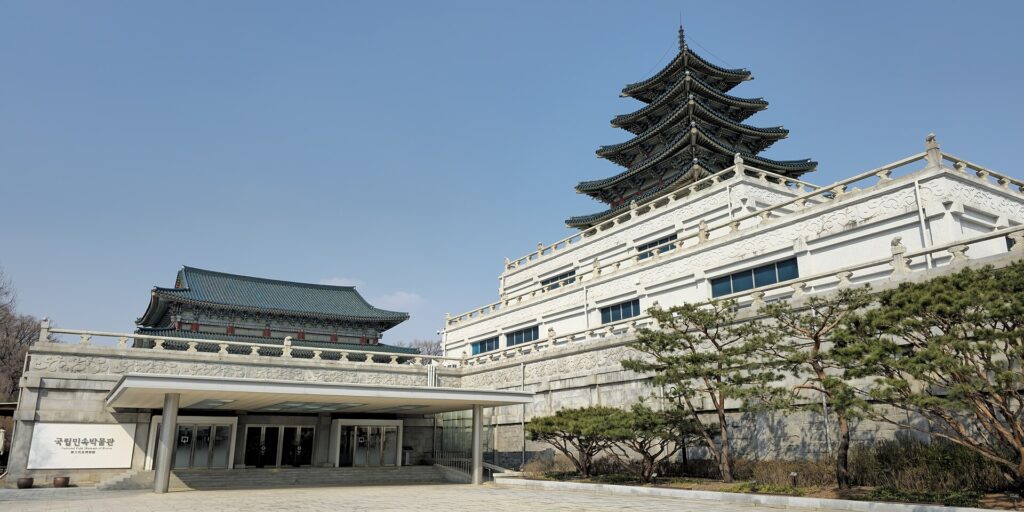
A visit near Gyeongbokgung becomes much easier when three arrangements are kept separate: palace admission, the National Folk Museum’s general exhibitions and the Children’s Museum reservation. Choose the main purpose of the outing first, then build the other stops around it.
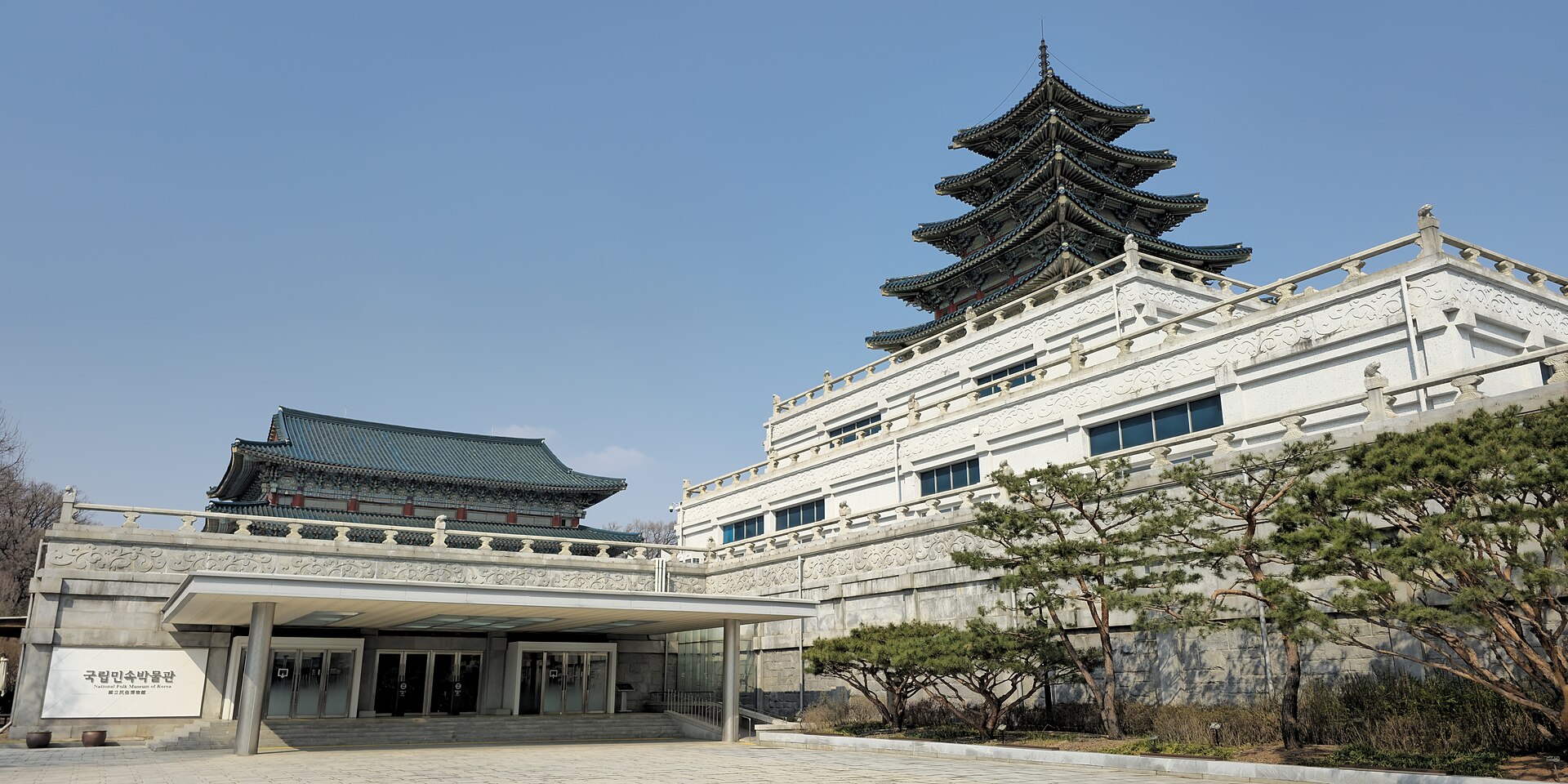
Free museum exhibitions do not mean free palace admission
The museum’s official visitor page lists its exhibitions as free, while explicitly distinguishing admission to Gyeongbokgung Palace. Decide whether you want both places or only the museum. This prevents a common planning mistake: assuming that the location near the palace means one admission arrangement covers every space you can see on the map.
Share the exact museum name and address with companions. The National Folk Museum is not the National Palace Museum, and it is not the National Museum of Korea in Yongsan. These are worthwhile but separate institutions. Use the museum’s official directions rather than choosing a nearby-looking palace gate and assuming it is the right route for your particular visit.
A child’s visit may need a different reservation
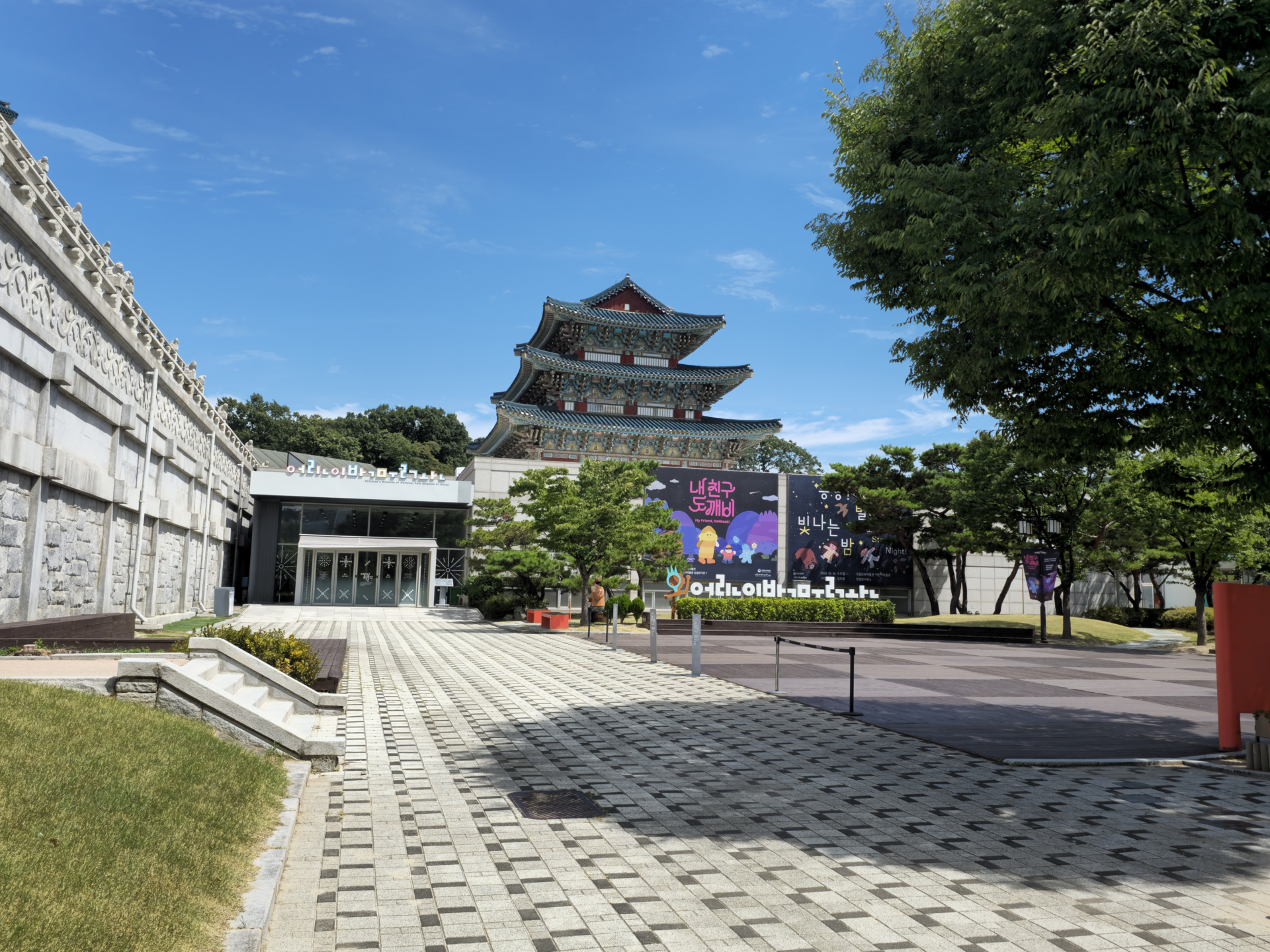
The official guidance allows general exhibition visits without online advance reservation but requires an online reservation for the Children’s Museum. The statement ‘you do not need to book the museum’ is therefore incomplete for a family. Identify the specific space your child wants to use before deciding whether a walk-in plan is sufficient.
If you obtain a timed children’s reservation, treat it as the anchor for the day and place other galleries around it. If you do not, choose a general exhibition activity and explain the alternative before arrival. Promising a hands-on session that you have not secured creates a problem that even a good permanent gallery cannot reliably solve. The distinction is practical, not merely administrative.
Bring a question about ordinary life
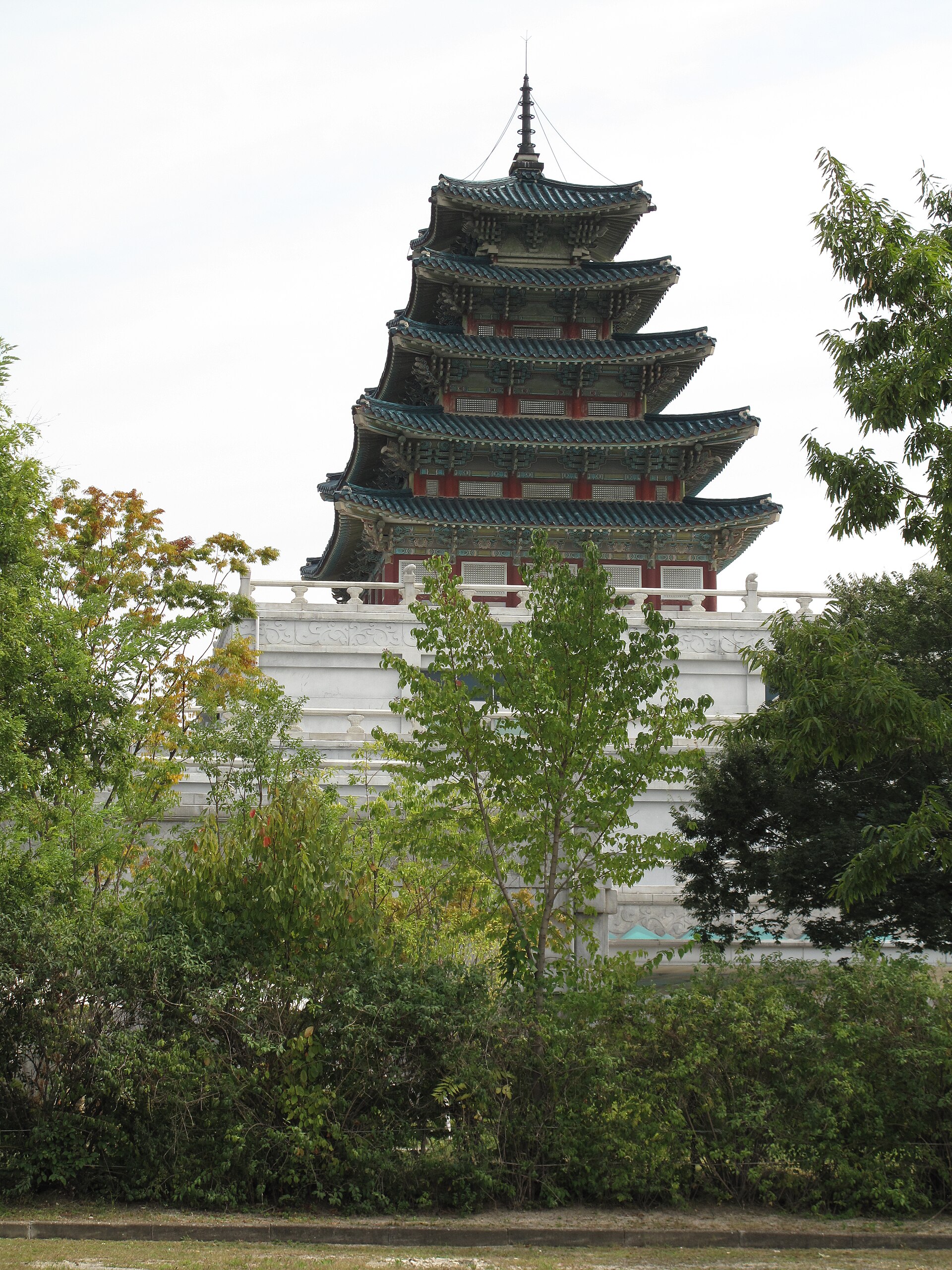
A folk museum offers a different line of inquiry from a royal palace. Choose an object that catches your attention and read who used it, when and for what task. That gives the visit a manageable focus. You can compare the object’s purpose with an equivalent task today without claiming that all Koreans, in every region and period, lived in the same way.
Do not use an old guidebook’s gallery title or an online photograph as a guaranteed checklist of objects currently on view. Displays change. If a particular subject matters, check the current exhibition description, then base your observations on what is actually present. A close look at a few well-explained objects is more useful than hurriedly searching for an item that has left the display.
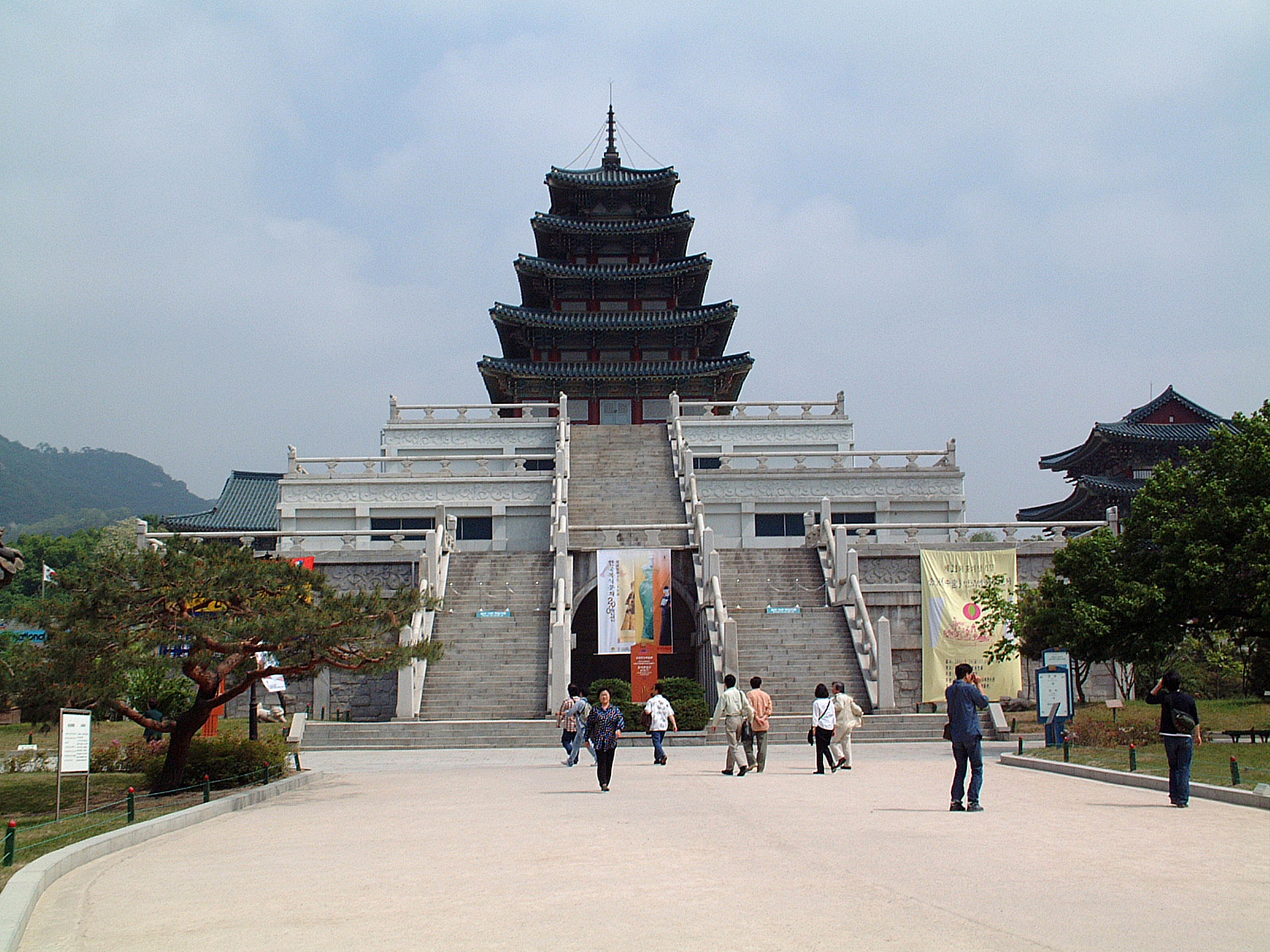
Account for the announced autumn gallery closure
When checked on September 27, 2026, the museum’s visitor page announced a temporary closure of Permanent Exhibition Hall 1 from September 30 through December 21, 2026. A visit during that period should not assume access to every permanent gallery. Check the remaining exhibitions before deciding how much of your day to allocate to the museum.
An individual gallery closure is not the same as a closure of the whole institution. Keep that distinction when reading notices. Separately confirm general opening, last admission, any booked activity and holiday closures. If the museum is important to you, give it a defined place in the itinerary rather than treating it as whatever time happens to remain after a long palace visit.
Before you go
37 Samcheong-ro, Jongno-gu. The official page lists March–October 09:00–18:00 with last entry 17:00, and a Wednesday extension; winter hours differ. Check the page for holiday exceptions and gallery notices. The museum states that it has no parking lot.
Check the venue’s current visitor information before setting out, especially for closures, access and reservations.