Location and Access
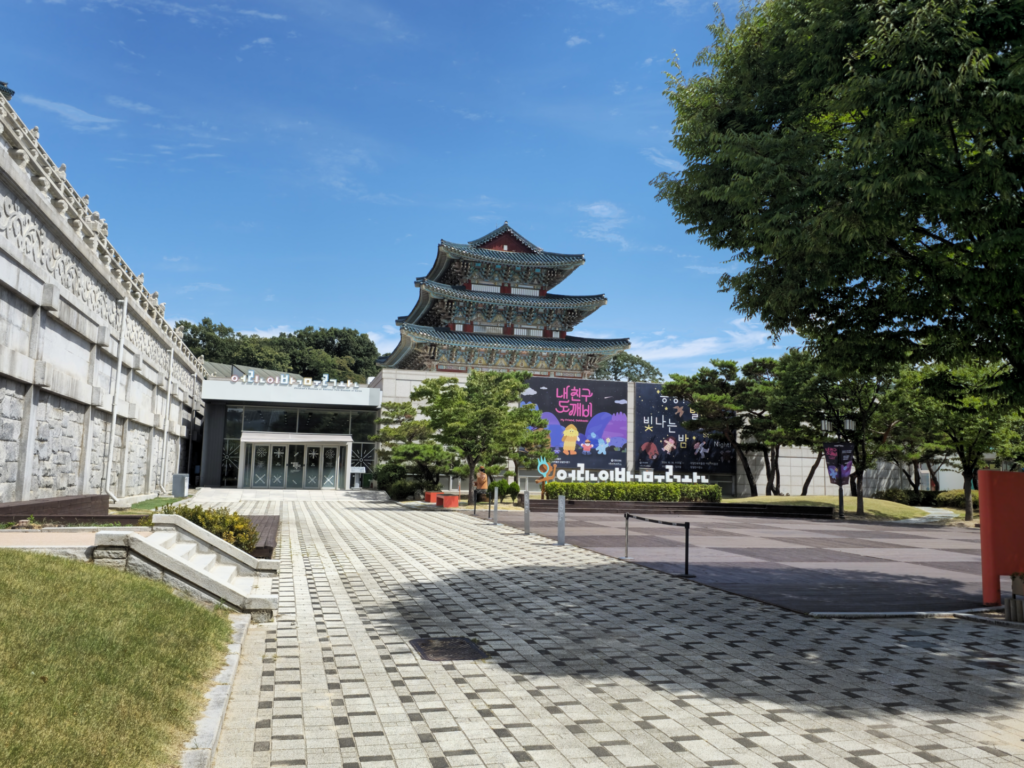
The National Folk Museum is located inside Gyeongbokgung Palace at 37 Samcheong-ro, Jongno-gu, Seoul. Visitors can reach the site via Anguk Station (Line 3) Exit 2, which is a 780-meter walk from the museum entrance. The facility operates seven days a week, Monday through Sunday, and provides multilingual support in Korean, English, Japanese, and Simplified Chinese. The museum presents historical artifacts used in the daily lives of Korean people in the past. Through its displays, visitors can learn about domestic and agricultural lifestyles as well as Korea’s cultural beliefs. The site includes three permanent exhibition halls and two special exhibition spaces, alongside a library and souvenir shop.
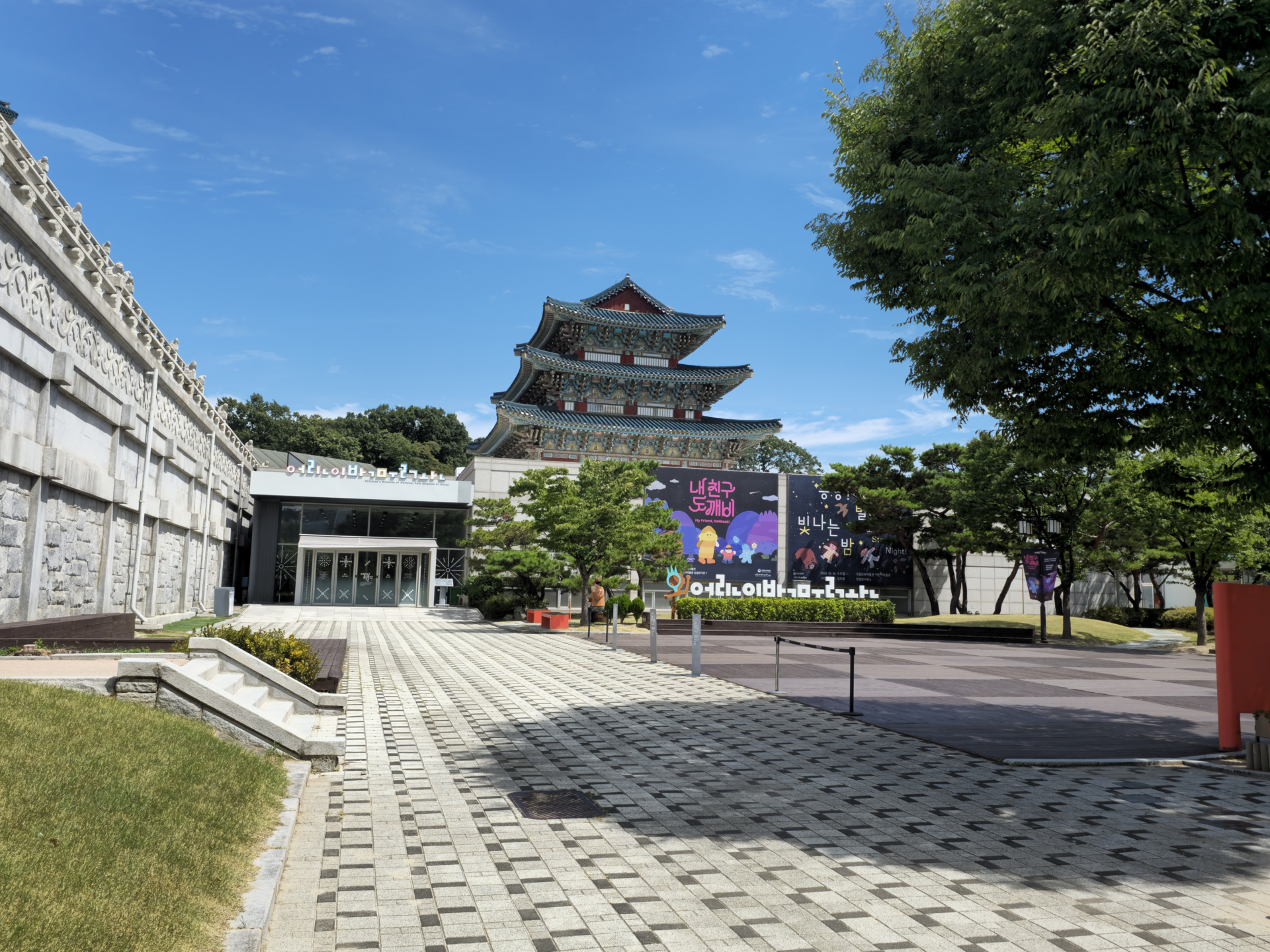
Image source: CairnsIB · CC BY-SA 4.0
Permanent Exhibitions
The museum features three permanent exhibition halls that trace the history of the Korean people. The first hall, titled '한민족 생활사' (Life History of the Han Ethnic Group), displays artifacts from prehistoric tools through Bronze Age and Three Kingdoms periods to Goryeo printing, celadon culture, Joseon science and technology, and the creation of Hangul. The second hall, titled '한국인의 일상' (Daily Life of Koreans), focuses on daily life including livelihoods, handicrafts, and food. The third hall examines the human lifecycle, featuring exhibits on birth, education, marriage, folk beliefs, death rituals, and ancestral rites.
Outdoor Displays
The outdoor area features a four-season vegetable garden, a thatched hut (원두막), a traditional rice pounder (디딜방아), and stone statues (돌하르방). These exhibits are part of the museum's broader operations, which include three permanent exhibition halls and over four special exhibitions per year. A specific outdoor installation recreates the 'Street of Memories' from the 1960s and 70s on a 1,150-square-meter area to the east. This section features replicas of modern chain stores (근대화연쇄점), cafes (다방), restaurants (식당), comic book shops (만화방), record stores (레코드점), barbershops (이발소), tailors (의상실), and photo studios (사진관). The display aims to evoke memories for older generations while providing an engaging space for children.
Cultural Performances
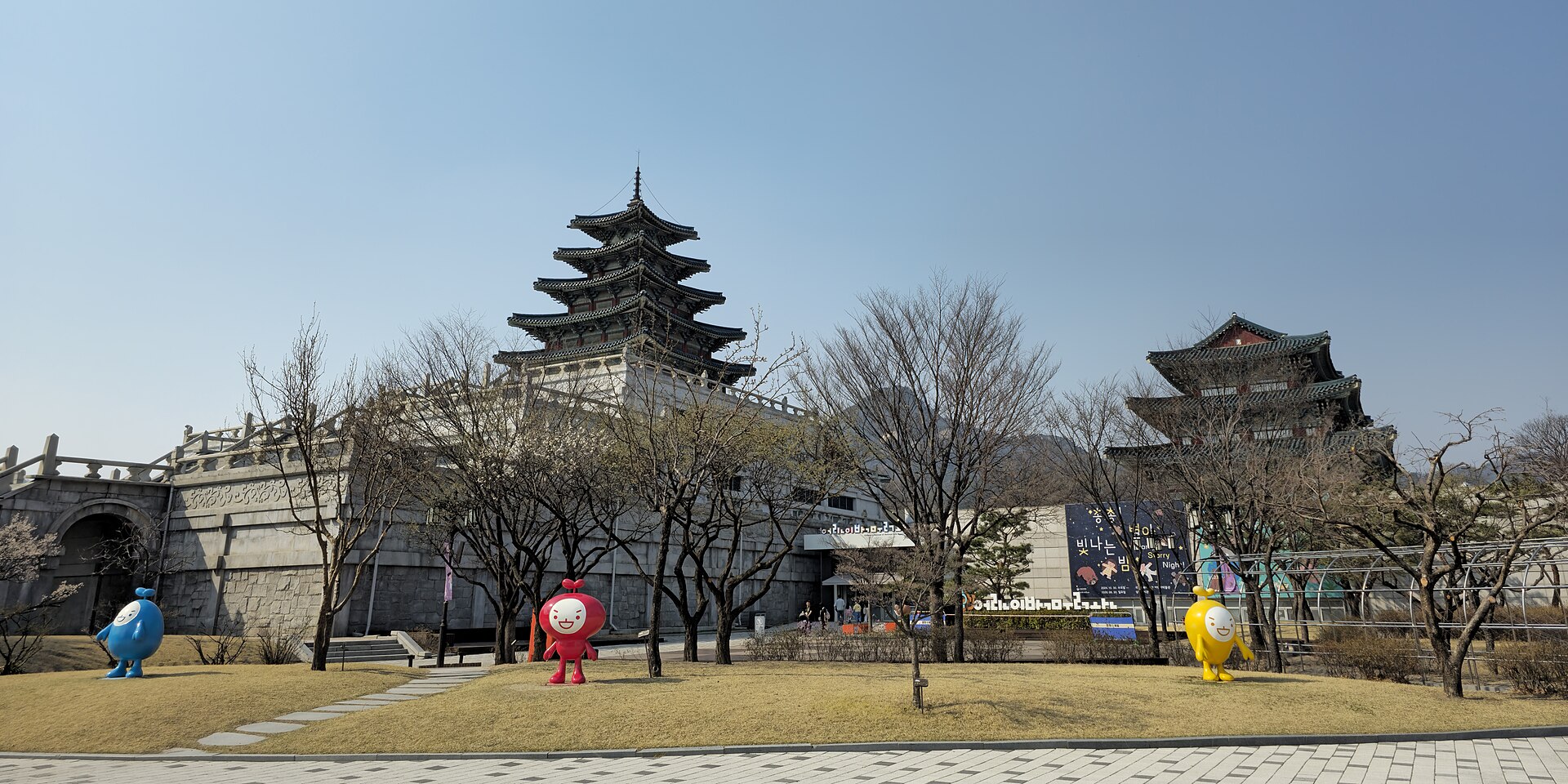
The museum hosts 'Our Folk Festival' (우리민속한마당) performances every Saturday and Sunday in the main hall or front yard. These events feature traditional dance, shamanic rituals (굿), national music (국악), folk percussion (풍물), Taekkyeon (택견), and mask plays (탈놀이). The museum also operates a library, souvenir shop, and a separate Children's Museum.
Practical Details
Admission to the museum is free, though a separate fee applies for Gyeongbokgung Palace. Operating hours are 9:00 AM to 6:00 PM from March to October, and 9:00 AM to 5:00 PM from November to February, with entry closing one hour before closing time. Extended evening hours (until 8:00 PM) occur on a specific weekday from March to October; this service is not operated from November to February. The museum is closed on January 1st, the first day of Lunar New Year (설), and the first day of Chuseok (추석). Visitors can access information in Korean, English, Japanese, and Chinese (Simplified). Strollers are available for rental, and facilities include accessible restrooms and wheelchair assistance. The museum is located at 37 Samcheong-ro, Jongno-gu, Seoul, which is a 780m walk from Exit 2 of Anguk Station on Subway Line 3.