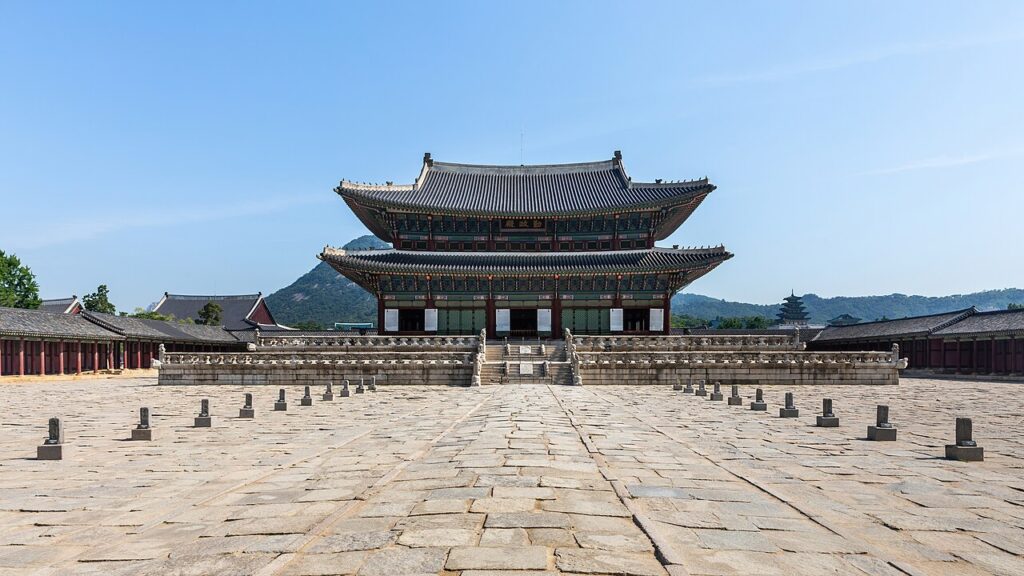
At Gyeongbokgung, the grand hall is only part of the view. The courtyard, the smaller working hall behind it and the pavilion across the water tell different stories. A short visit becomes more rewarding when you notice those differences instead of treating every roof as another photograph to collect.
October 2026 planning note: access to Geunjeongjeon’s raised stone terrace is restricted through October 31. Plan to appreciate the hall from permitted courtyard areas rather than building your visit around climbing its terrace. The dated details below were checked on October 3, 2026.
Start with the courtyard, not the staircase
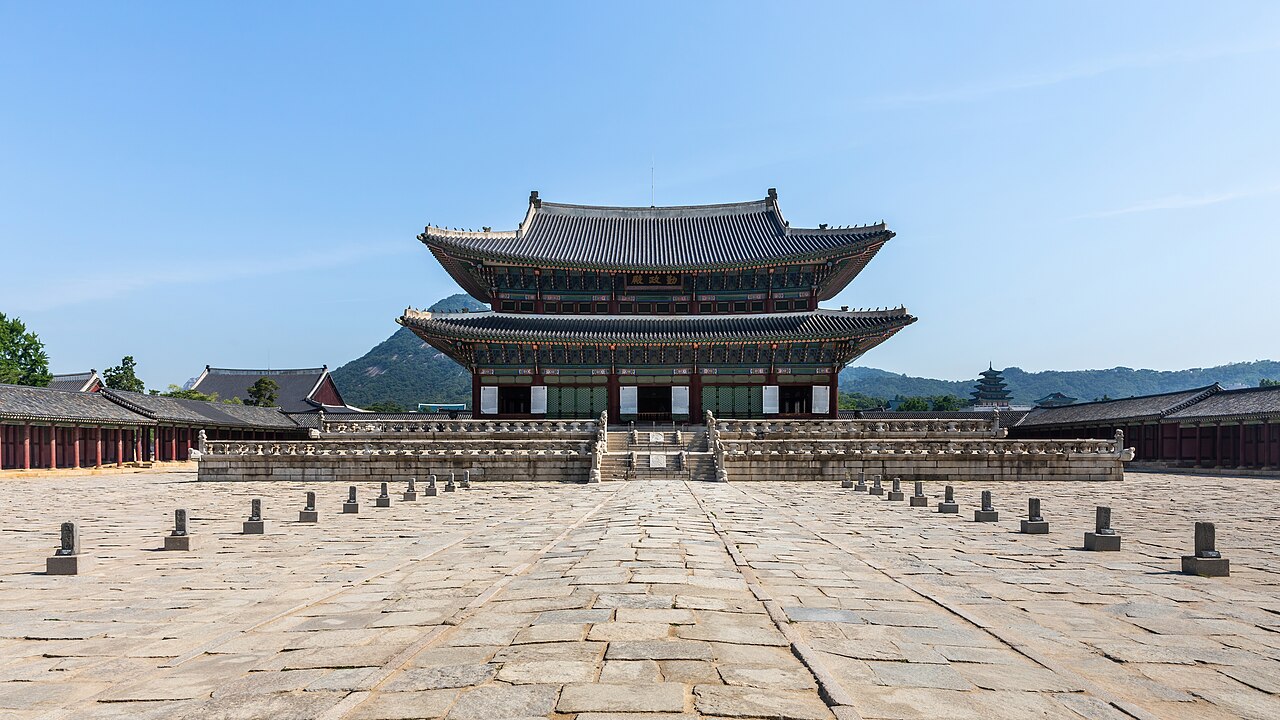
Stand back where permitted and look at the space leading toward Geunjeongjeon. The broad paving, the central approach and the small stone markers make the courtyard part of the architecture. The markers indicated officials’ positions by rank during ceremonies, as explained in this Korean government heritage feature. They turn what first looks like empty foreground into a space arranged around hierarchy.
The palace’s terrace restriction notice cites concern about damage to stonework during the busy season. It names the raised terrace, not a closure of the entire palace. Follow the barriers on the day; do not use an older photograph of visitors on the steps as permission to enter.
Use Sajeongjeon to change the question
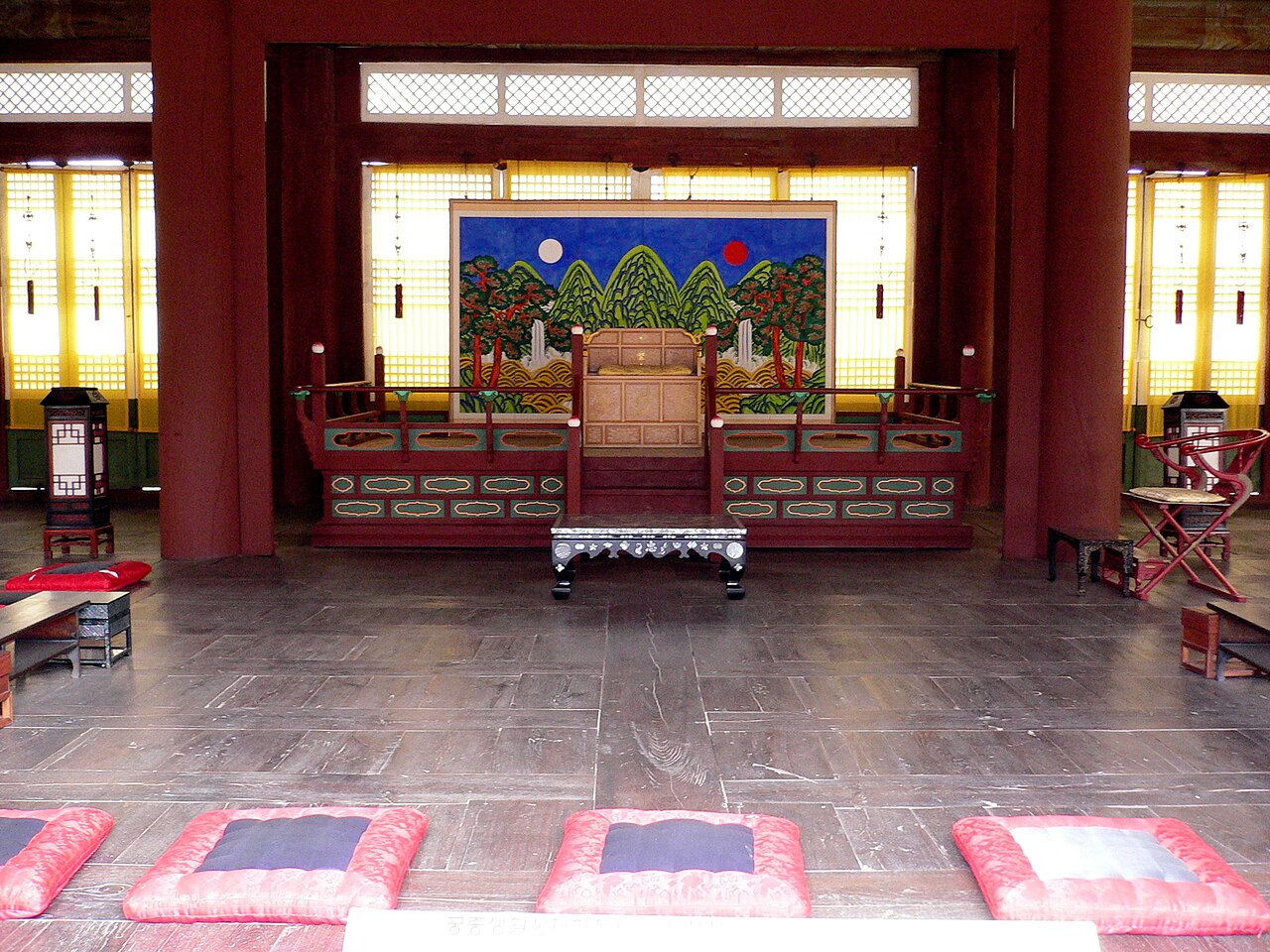
After the ceremonial court, locate Sajeongjeon on the palace map. The question changes from “Where was authority displayed?” to “Where was work done?” This was a space for the king’s routine discussions and affairs of government. That distinction helps separate buildings that can otherwise blend together during a first visit.
The palace authority’s May 2024 announcement describes researched reproductions of furnishings for a morning court audience. It also explains that the display was arranged to be viewed from outside through opened doors. Treat that as background to the display, not a promise that you may walk into the room today. Use the current signs and viewing boundary.
A useful pause here is to compare scale and setting with the main courtyard. You do not need to memorize a dynasty’s chronology to recognize that formal ceremony and everyday government required different spaces.
At Gyeonghoeru, separate the waterside view from an interior booking
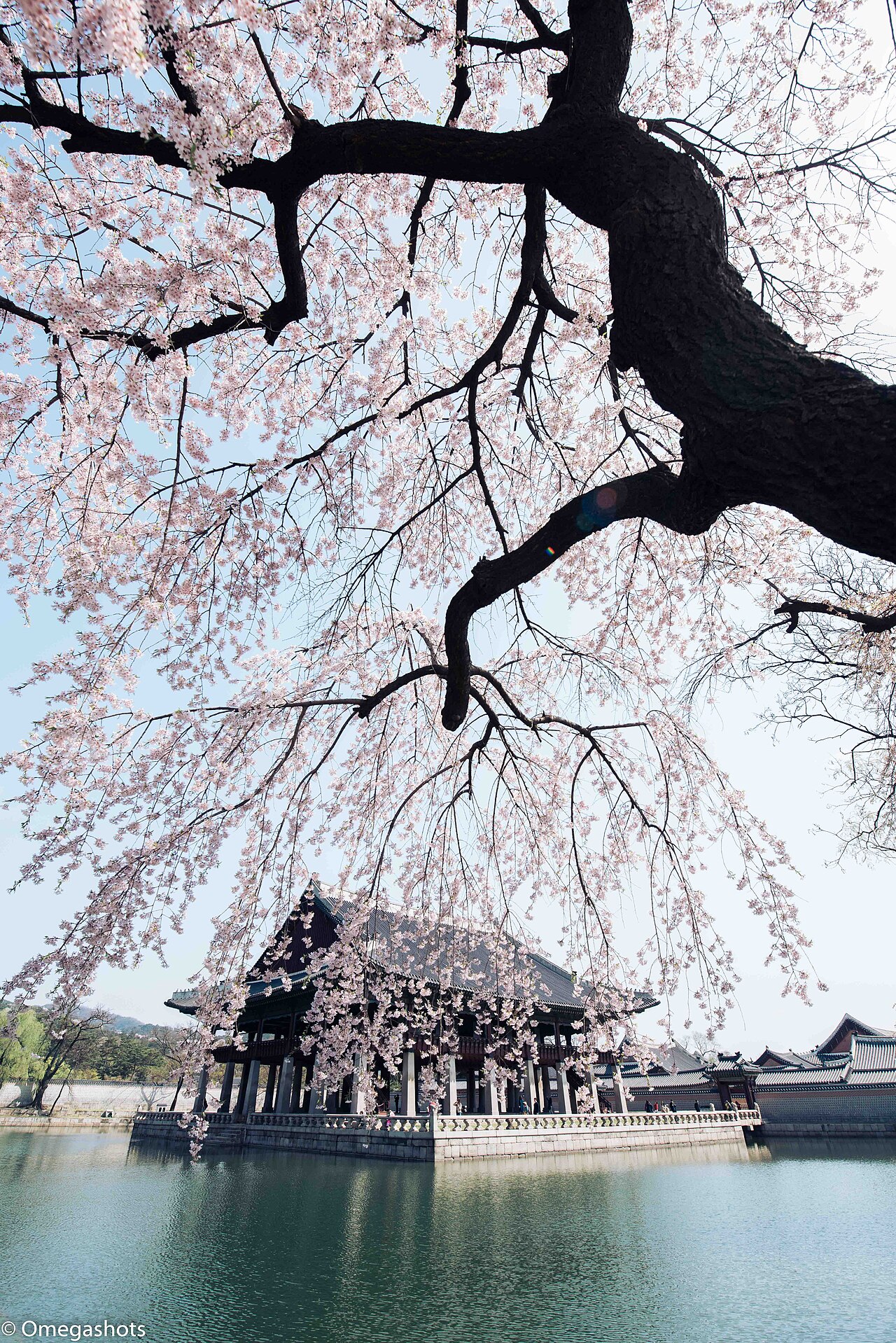
For a first visit, the exterior view can be the planned destination. Notice how the water changes the building’s setting compared with Geunjeongjeon’s paved court. A photograph taken from the pond edge and an interior pavilion tour are different experiences; a general palace visit should not be planned as if they are interchangeable.
The 2026 Gyeonghoeru–Hyangwonjeong special-tour notice describes a Korean-language program with advance online reservations. It lists selected Wednesday and Friday sessions through October 30, with exclusions including the October 7–11 palace-festival period. General palace opening during a festival therefore does not mean this interior program is operating.
If the inside view is your main reason for coming, secure the appropriate reservation before arranging the rest of the day. If it is unavailable, choose the exterior visit deliberately rather than arriving with an unconfirmed expectation.
Build a visit around three stops and one realistic limit
Use Geunjeongjeon, Sajeongjeon and the Gyeonghoeru exterior as a manageable focus, following the official palace map and open paths between them. This is a suggested emphasis, not a timed or accessibility-tested route. Leave space for tickets, photographs, rest and returning to an open exit.
According to the October–November 2026 operating notice, October daytime hours are 09:00–18:00, with last entry at 17:00. November closes an hour earlier, with last entry at 16:00. Tuesdays remain the regular closure day in that notice.
Arriving near last entry leaves little room for a slow three-stop visit. If time or energy is short, spend it on the main courtyard and one contrasting space. Save a separate museum visit or a northern-palace extension for a day when you can give it attention.
Before leaving, identify the current day’s entrance conditions and any special-event requirements on the palace website. The address is 161 Sajik-ro, Jongno-gu, Seoul. For this visit, one photograph worth understanding is a better result than a hurried collection of buildings you cannot tell apart.