At Byeongsan Seowon, the most useful thing to look for is the space between the buildings. A roof edge cuts across the mountain; a row of columns divides a broad view into smaller pictures. This is an especially rewarding Andong stop if you enjoy architecture but do not want a visit to become a memory test of building names. Start with three relationships: study and landscape, gathering and ceremony, enclosure and openness.
A school whose surroundings are part of the lesson
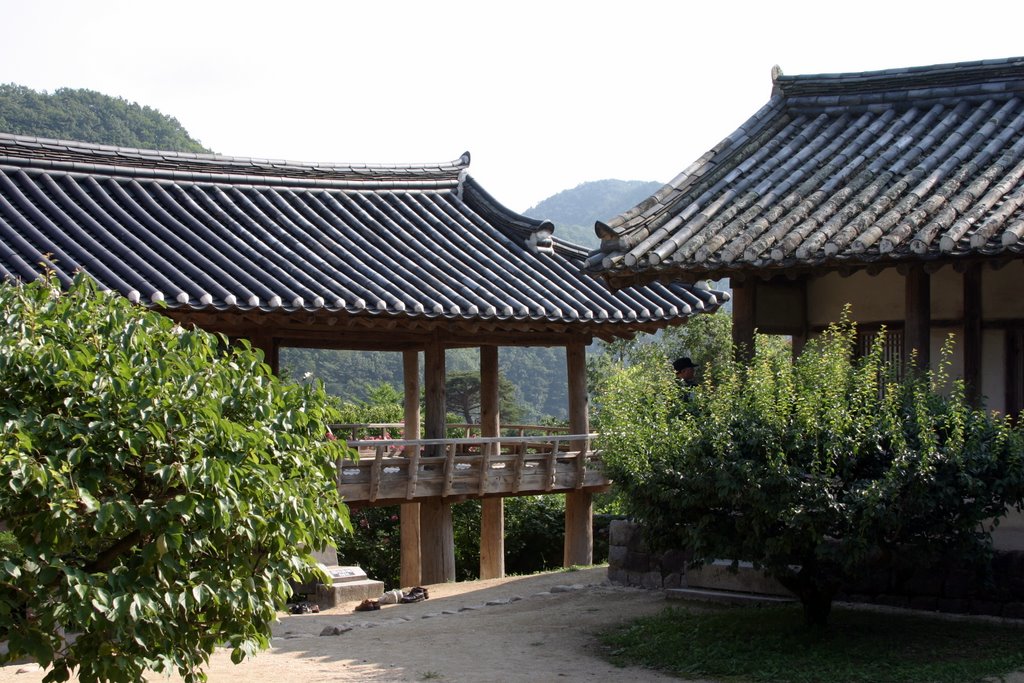
UNESCO’s account of Korea’s nine seowon, inscribed together in 2019, identifies learning, honoring scholars and engagement with the natural setting as connected purposes. That gives the open ground here a different meaning from an empty gap awaiting another building. It belongs to an institution in which the setting mattered as well as the rooms.
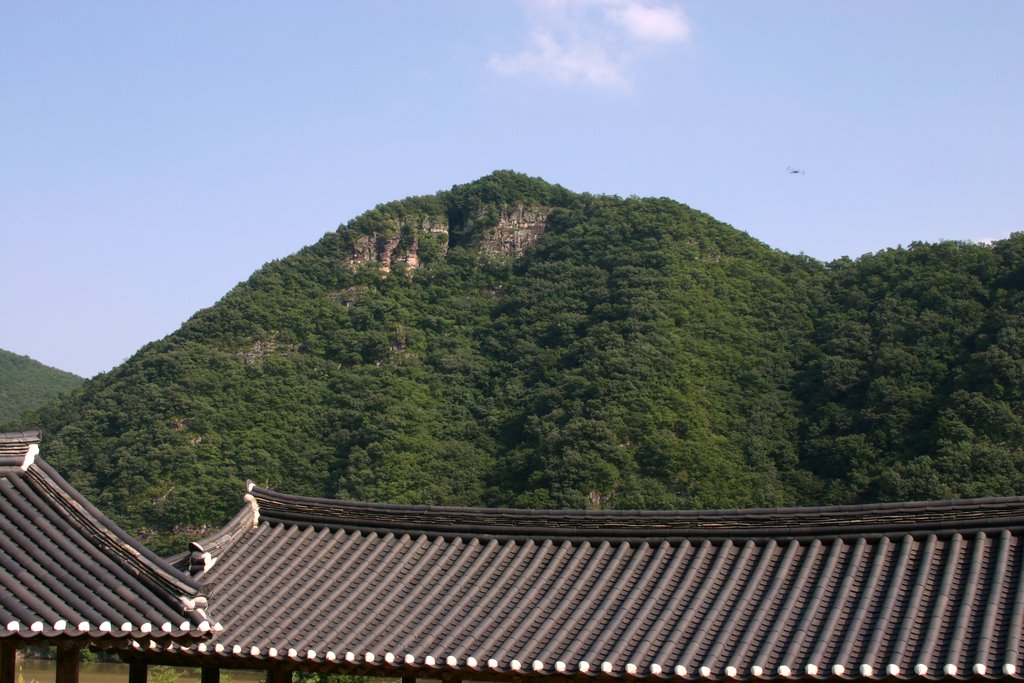
Try a simple looking exercise before taking a wide photograph. Identify one foreground edge, such as a column or eave, then the distant slope behind it. Move a few paces along a permitted path and notice how much the composition changes. The interest comes from that overlap. A close-up of roof tiles alone loses the relationship that makes the academy distinctive.
Separate the lecture hall from the shrine
The heritage record identifies Ipgyodang, as the lecture hall and Jondeoksa as the shrine. The academy honors the scholar and statesman Yu Seong-ryong. These are different functions: a place to teach and learn, and a place of commemoration. East and west dormitory buildings add the everyday student side of the complex.
Rather than following every doorway as though the site were a palace, use the signs to distinguish those functions. A courtyard with buildings facing it invites you to think about collective learning; an inner gate changes the sense of access and hierarchy. This reading works from public visitor routes. A door being visible does not mean that the room beyond it is open to enter.
Mandaeru: look up before looking out
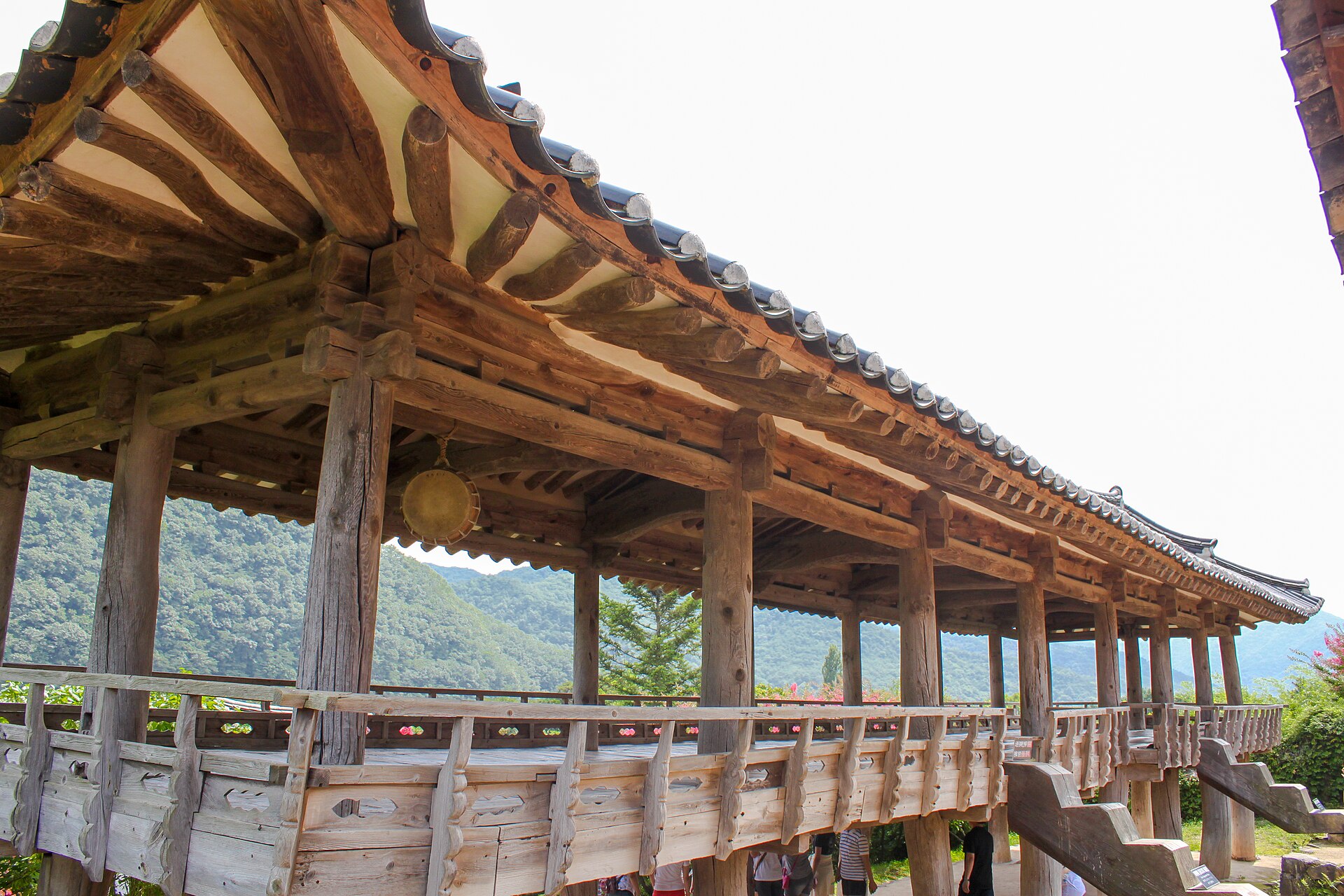
Mandaeru is the pavilion associated with views toward the Nakdong River and Byeongsan. The Andong World Heritage Festival’s site guide places it alongside the lecture hall, dormitories and shrine in its introduction to the academy. The pavilion is worth reading as a structure, not merely using as a viewpoint.
Look at the intervals between its posts and at the rafters above. Repeated timber members give scale to the open side: the landscape feels expansive because the frame is legible. For a useful pair of photographs, make one image about the roof and columns and another about the landscape seen in relation to them. Follow current access barriers; older photographs are not permission to climb onto a closed platform.
Finish at the small scale of Gwangyeongji
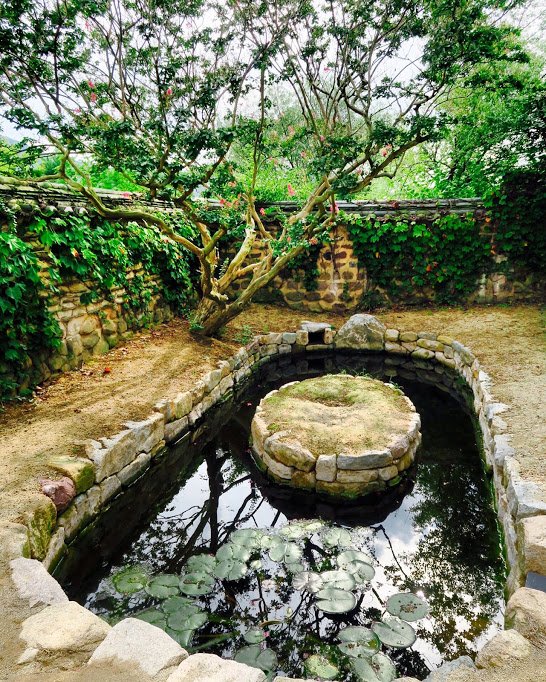
After broad mountain views, the small pond changes the scale of attention. Compare its stone edge, the surface of the water and the nearby plants with the much larger shapes around the academy. It is an effective final stop precisely because it asks you to slow down rather than find a grander panorama. Reflections will depend on light and water conditions; they are a possibility, not a guaranteed shot.
For the practical part, the academy’s visitor information lists free admission and parking, with seasonal opening hours of 09:00–18:00 in summer and 09:00–17:00 in winter. The address is 386 Byeongsan-gil, Pungcheon-myeon, Andong. Confirm the applicable seasonal closing time for your date at 054-858-5929, especially before making this a late-afternoon stop.
Pack the visit around quiet observation rather than a picnic: the academy prohibits food, smoking and pets other than guide dogs. If you want an English explanation, arrange it in advance through Andong tourist information rather than assuming a guide will be available when you arrive. Leave with one clear idea of how the buildings frame their setting; that is more memorable than rushing through a list of names.