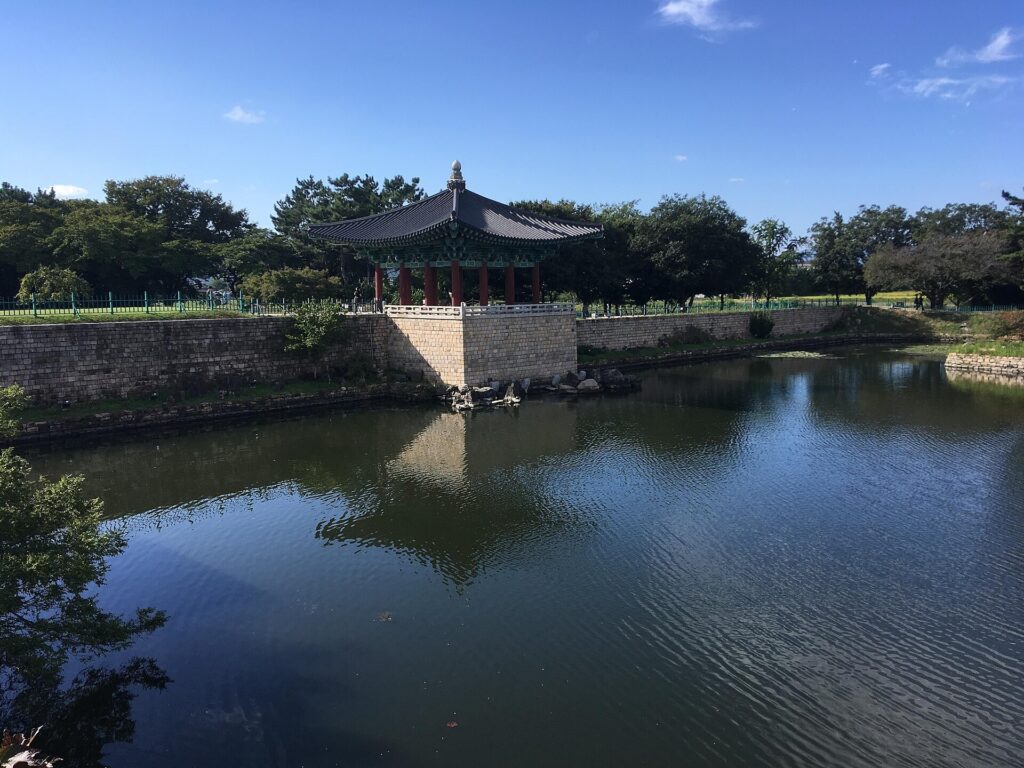
A night photograph makes Donggung and Wolji look like a single perfect view: a lit pavilion, its reflection and darkness around the edges. On the ground, the interesting part is how the view keeps changing. Arriving before dusk gives you time to understand the setting before the lights turn architecture into a bright outline. You can build a visit around that transition without chasing an exact replica of somebody else’s photograph.
First, recognize a palace landscape rather than an intact palace
The Korea Tourism Organization’s site introduction connects this eastern palace area with the Silla crown prince and royal banquets. The pond dates to 674. The buildings visible today need a different label: they include reconstructions, not an entire palace preserved untouched from the seventh century.
That distinction makes the site more interesting, not less. Look for the relationship between water, platforms and buildings. The visitor experience mixes surviving evidence with later interpretation. If you enjoy screen locations, VISITKOREA also identifies it with The Beauty Inside; the palace landscape has a much longer story than that appearance. A drama association is an entry point, not the explanation for every structure.
Use the model to imagine what is missing
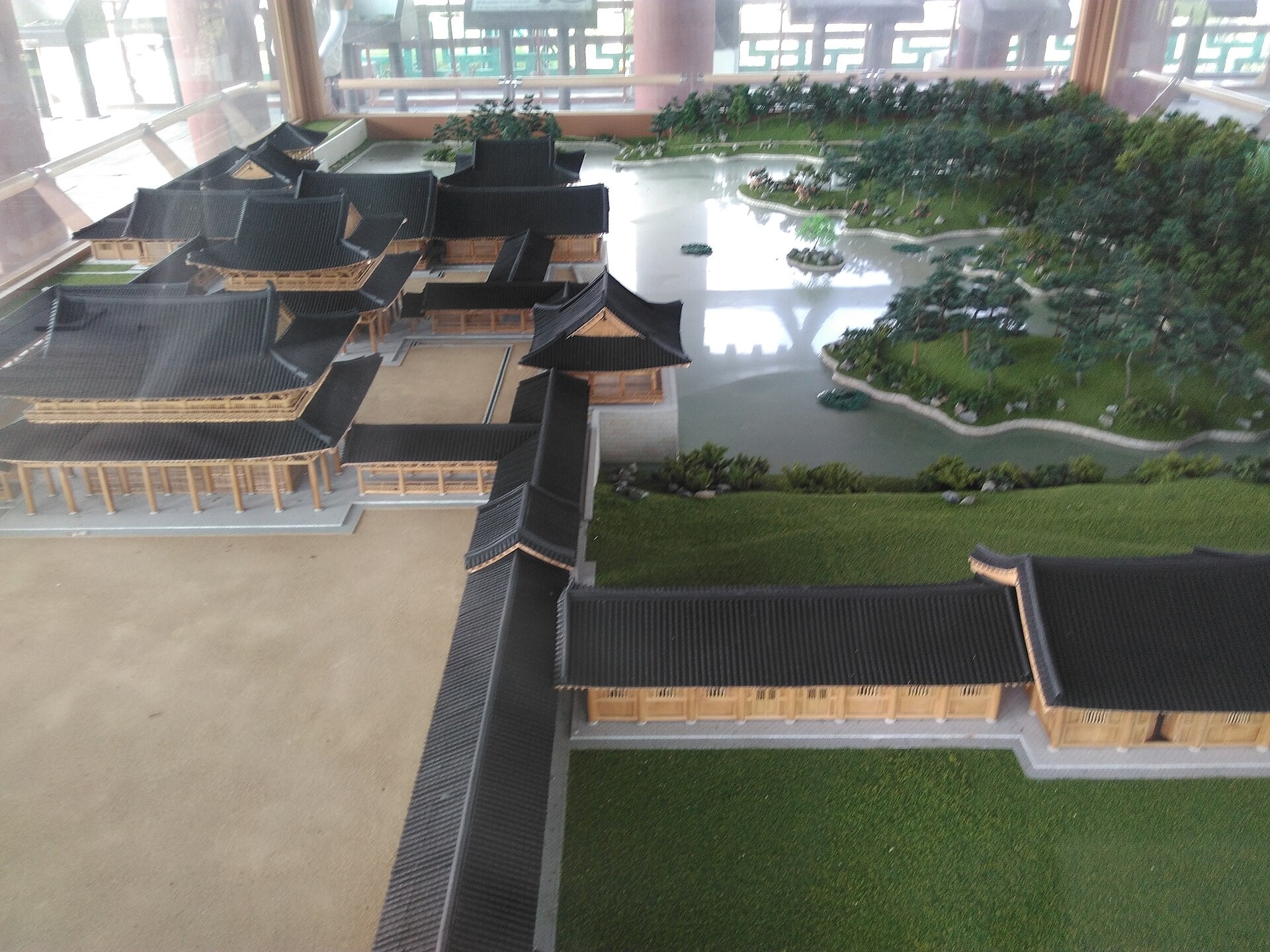
A model can help you ask a better question: how did the pond relate to a larger group of buildings? Compare an interpreted layout with what you can actually see outside. Do not read every miniature roof as a surviving building or every open space today as proof that nothing once stood there. Check the model’s own label for the period and reconstruction it represents.
For the excavated objects, the separate Gyeongju National Museum’s Wolji Hall provides a useful continuation. It is a different stop with its own visiting hours. Choose the museum before the pond if objects and archaeology are your main interest; choose a slower pond walk if you have only one short window. Trying to squeeze both into the final hour before closing turns the connection into a rush.
Move along the curve instead of waiting for one perfect spot
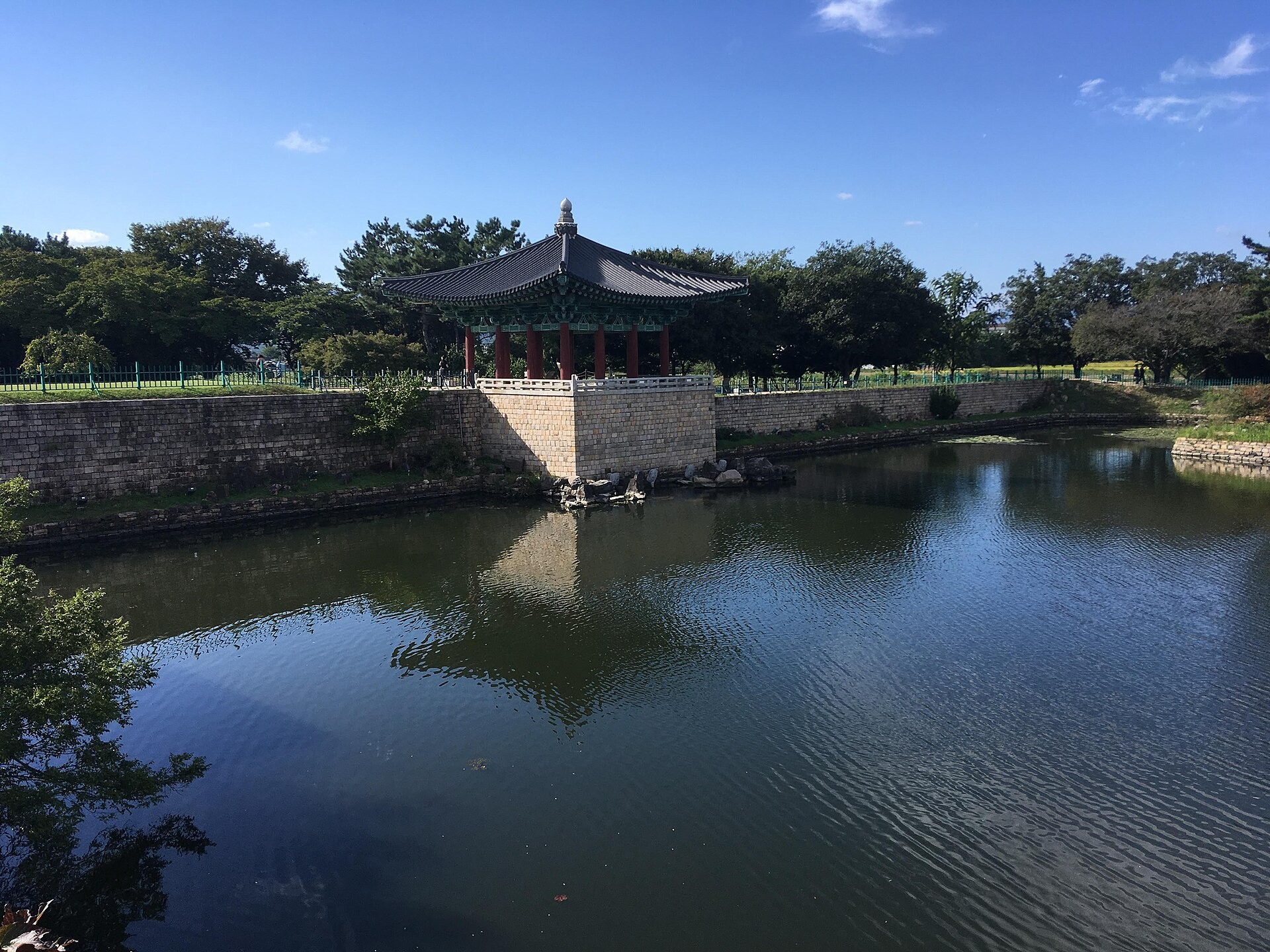
The tourism organization’s account of the palace landscape explains that the curving shoreline prevents the whole pond being seen from one point. A building that seems centered from one position can slide behind vegetation from another. Walking changes the composition as much as changing your camera does.
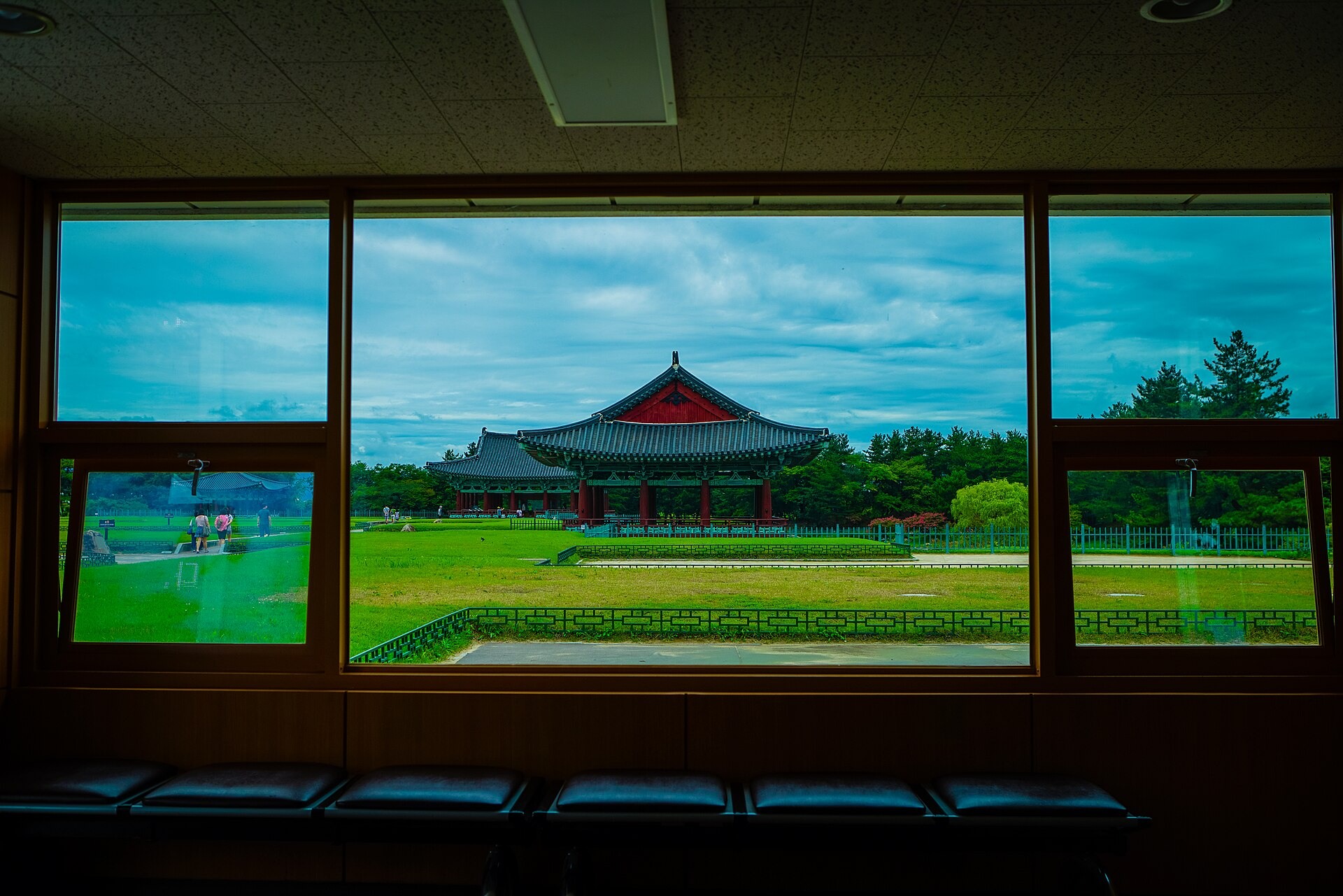
Make a small set of contrasting pictures: a wide view to locate the pavilion, a closer frame that includes a post or tree, and a detail of the water’s surface. Use only open visitor paths. The archival window photograph shows a way of framing, not a promise that the same interior will be accessible. Avoid blocking a narrow path while waiting for everyone to disappear.
Stay through the change of light, with a return plan
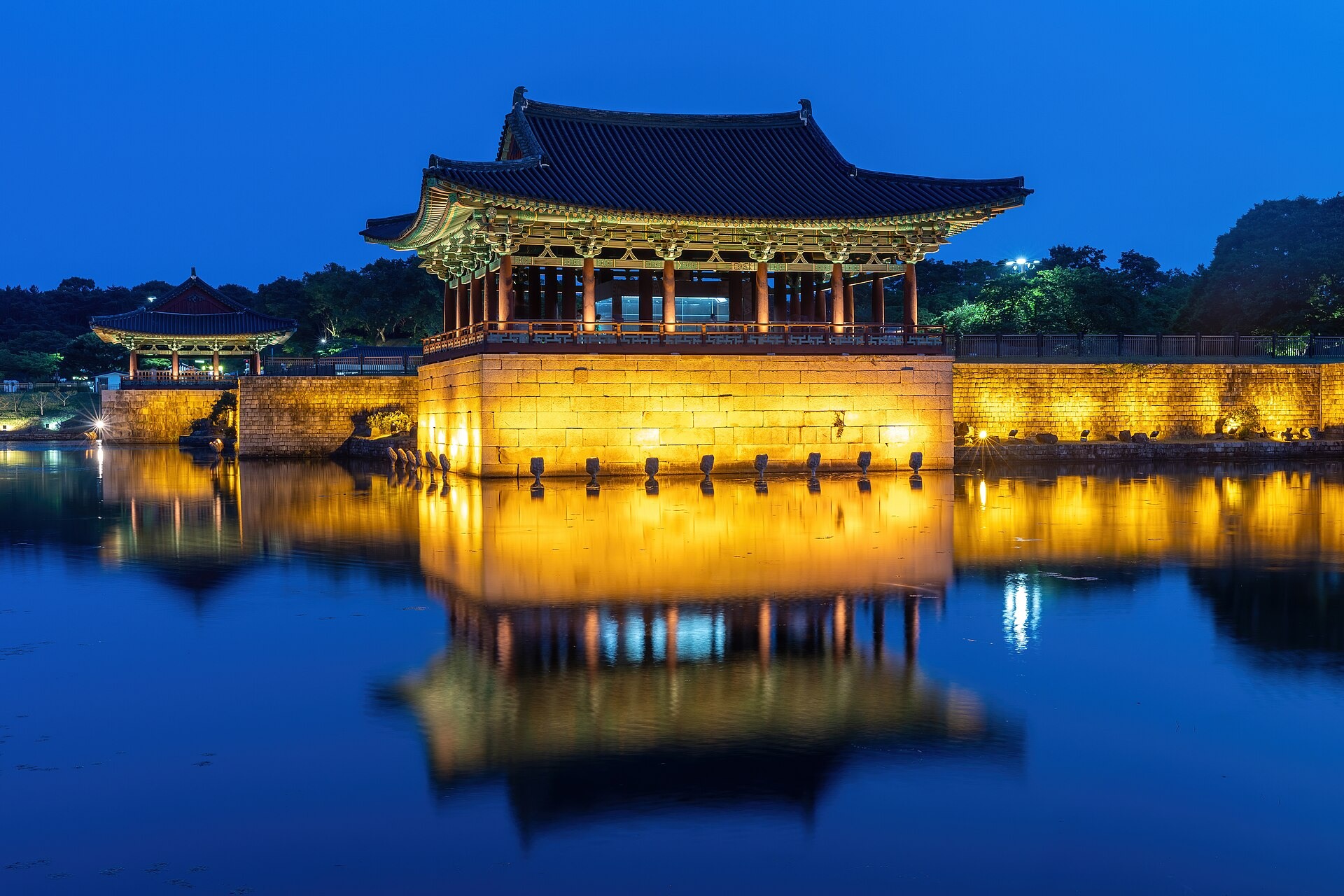
Before full darkness, remaining color in the sky can balance the illuminated roofs. Try a lower exposure on your phone if the lights become featureless white patches, and hold it steady against your body. Ripples may break the reflection; that is part of photographing water, not a failed visit. This is practical photographic guidance rather than a guarantee about the lighting on a particular evening.
The current visitor listing gives 09:00–22:00 opening, with final admission at 21:30, and adult admission of 3,000 won. Use 102 Wonhwa-ro, Gyeongju for navigation. Do not confuse Donggung and Wolji with Donggungwon, the botanical attraction in the Bomun area. A similar name can send you to the wrong side of the itinerary.
Visitor details checked on 4 October 2026; inquiries: 054-750-8655. Leave time to find your onward transport before closing. The most satisfying result is a pair of memories: the pond as a physical landscape in daylight and the same landscape transformed by reflections after dusk.