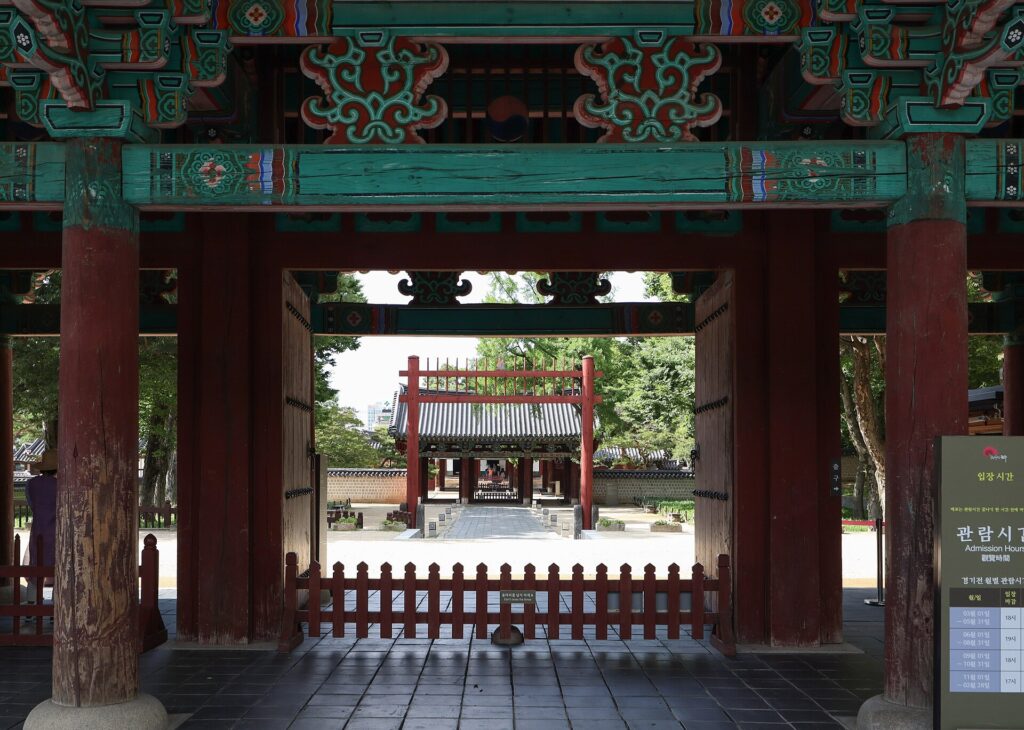
Gyeonggijeon is easy to reduce to a handsome gate beside Jeonju’s Hanok Village. Step inside with a different question: why did a dynasty need to preserve a king’s image here? That question connects the shrine, the portrait museum and the historical-record displays. It also makes the visit more interesting than treating the grounds as a miniature version of a Seoul palace.
A portrait shrine rather than a residential palace
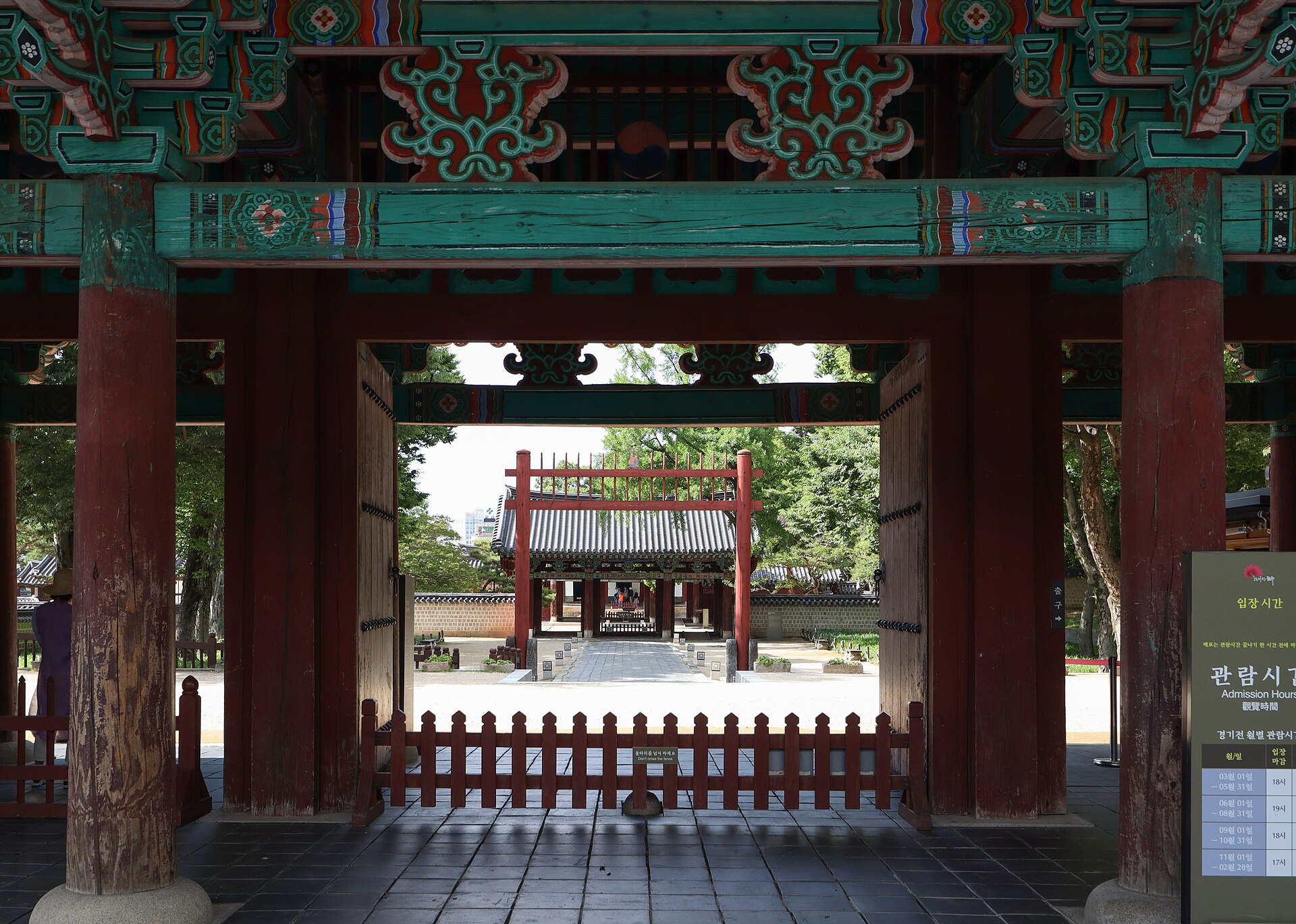
Jeonju’s heritage introduction dates the shrine’s establishment to 1410, to house a portrait of Taejo, the founder of Joseon. It also records destruction in 1597 and rebuilding in 1614. Those dates matter because what you see is a preserved and rebuilt place of remembrance, not an untouched royal household.
Look along the sequence of gateways toward the central shrine. The changing frames give the approach a sense of ceremony. A photograph that includes more than one threshold can explain that spatial order better than an isolated close-up of decorative paint. Follow the signed visitor route and respect the distinction between seeing a sacred interior and being allowed to enter it.
Let the street and the enclosure remain different experiences
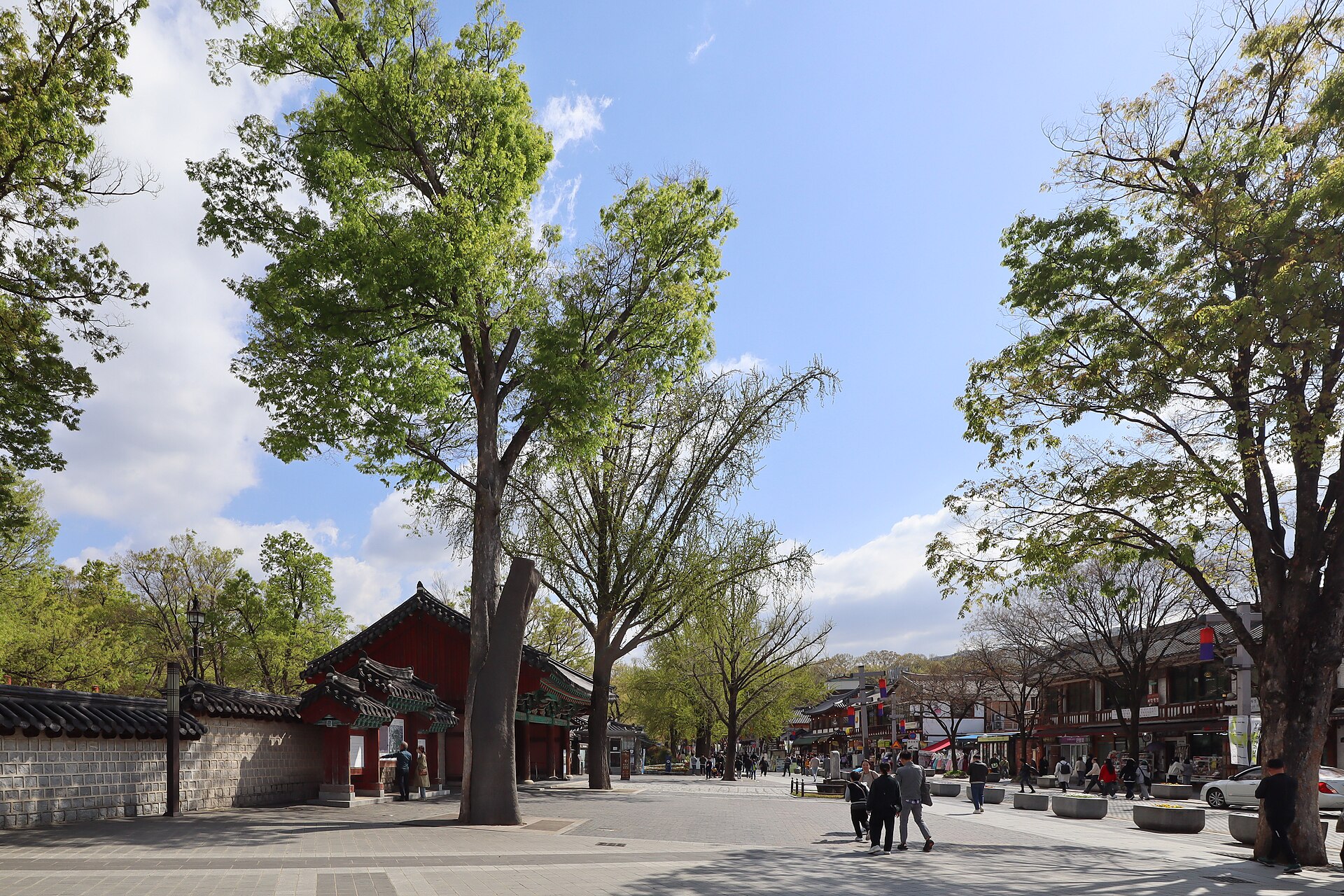
Outside, the street supplies movement, shopfronts and passing people. Inside, gates, courtyards and trees encourage attention to smaller shifts in distance and scale. That contrast is a reason to give Gyeonggijeon its own block of time, rather than using it only as a shortcut between food stops.
One practical way to photograph the visit is to make two images with different jobs. Use the exterior to show how the shrine sits in the neighborhood, then use the interior to show the ordered approach. Avoid asking both photographs to be an empty postcard. People at the edge of a frame can convey scale; waiting briefly is preferable to obstructing the entrance for a staged shot.
The archive asks what survives when a building does not
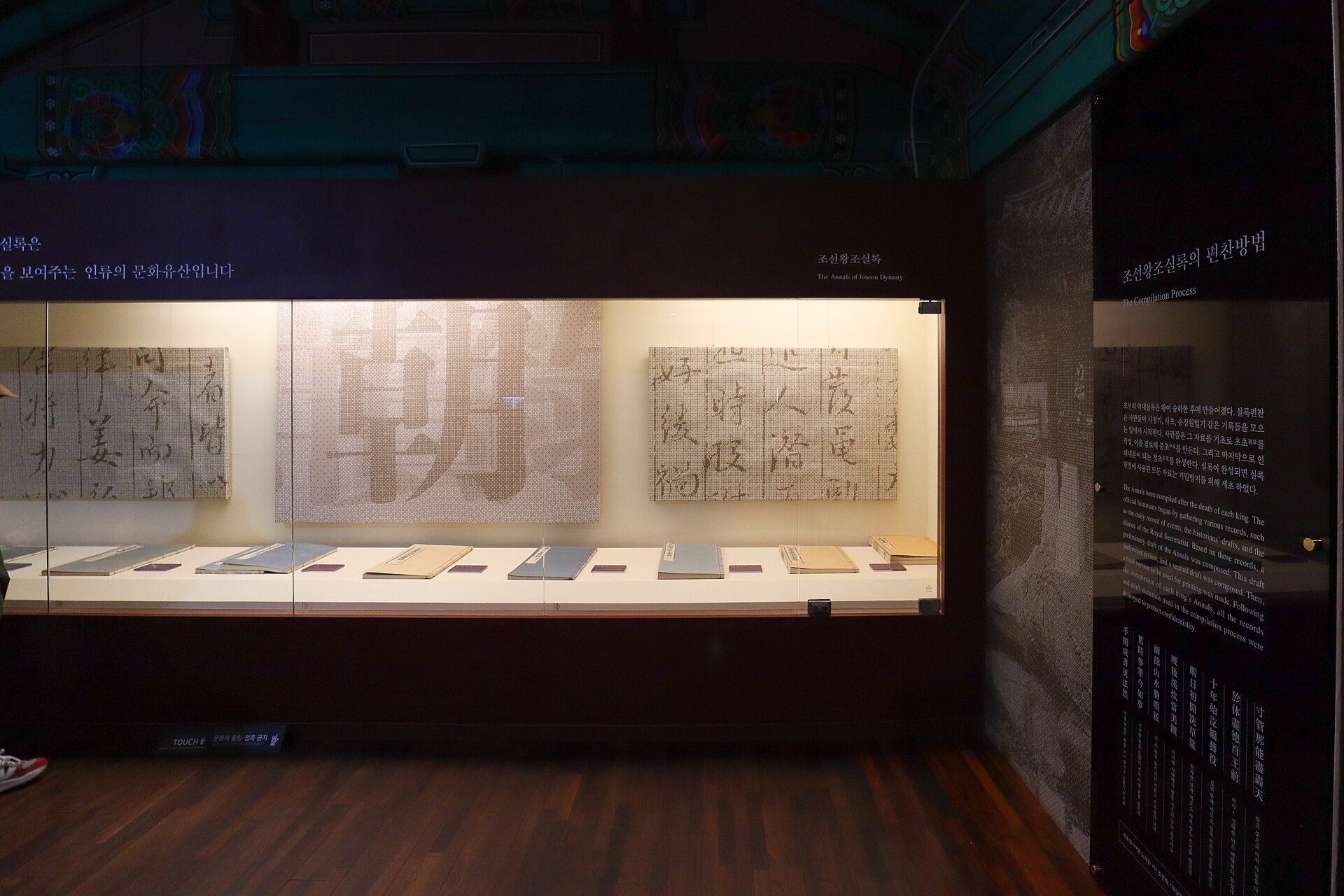
Jeonju’s tourism information also identifies Jeonju Sago within the complex, associated with the Annals of the Joseon Dynasty. Read the labels carefully: an archive building, the records connected with it and a reproduction placed on display are different things. A historic title does not mean every book in a case is an original volume.
A useful question here is how an institution preserves continuity across war, loss and rebuilding. Compare the idea of keeping a ruler recognizable in a portrait with the idea of keeping a reign legible in written records. This is an interpretive connection, not a claim that the two collections served identical purposes. It gives the quieter display rooms a place in the visit instead of treating them as an optional extra after the architecture.
Give the portrait collection its own attention
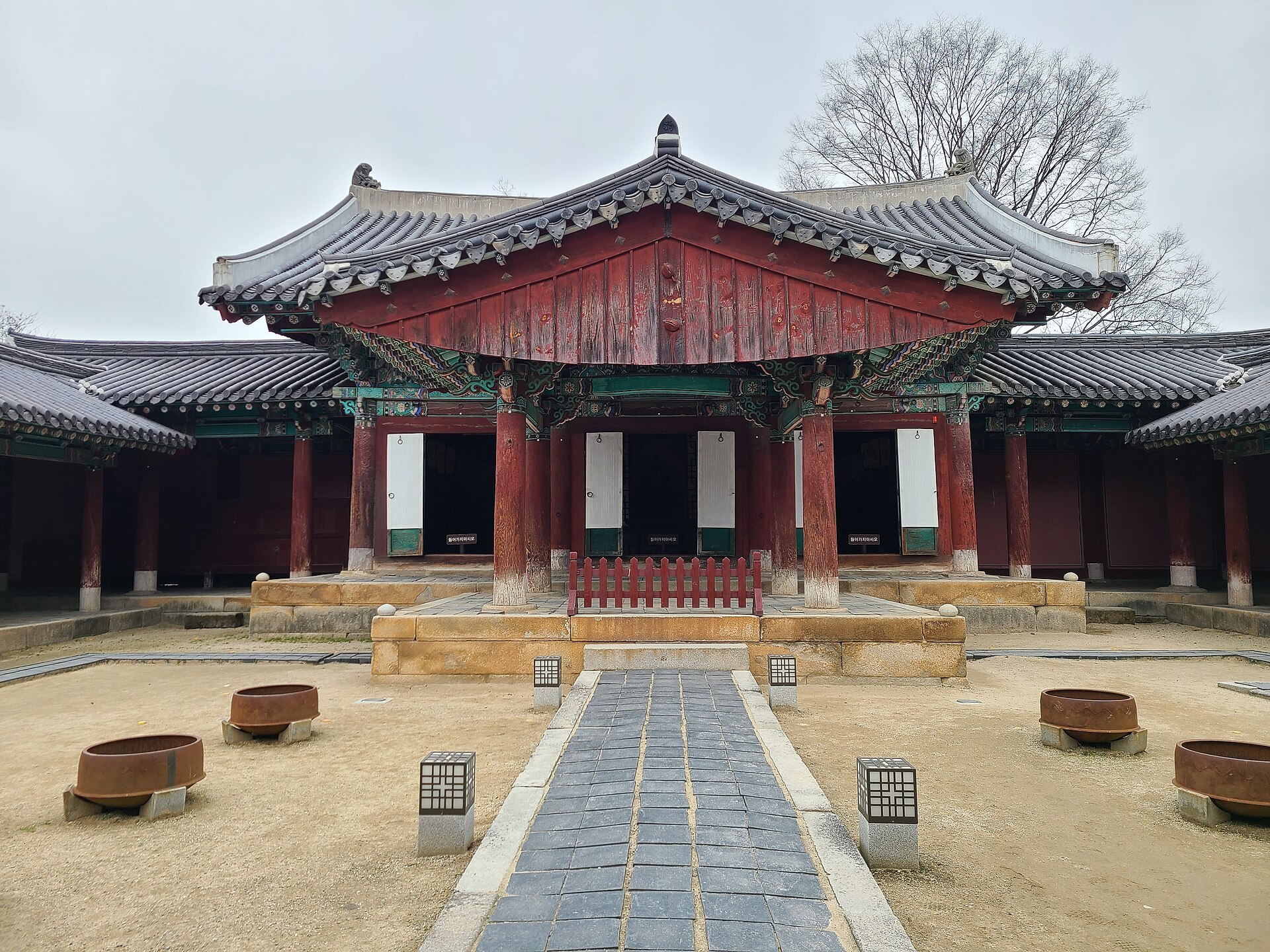
The city’s cultural-facilities guide places the Royal Portrait Museum at 44 Taejo-ro and describes exhibits concerning Taejo, royal portraits and ceremonial transport. Use the displayed descriptions to distinguish the person represented, the date of the image and the date or status of the object in front of you. Those are three separate questions.
The city lists October opening for Gyeonggijeon as 09:00–19:00, with last entry one hour before closing in its tourism guidance. Standard non-resident adult shrine admission is 3,000 won. Do not assume that the museum’s rooms remain accessible until the grounds close: confirm the day’s museum arrangements at 063-231-0090, or the shrine at 063-281-2788, if the collection is your main reason to come.
For a compact visit, follow the gateways to understand the approach, read the portrait displays, then turn to the archive story before returning to the street. Finish with one specific thing you learned to distinguish—an original from a reproduction, a shrine from a palace, or an image from the record of a reign. That is a more durable souvenir than another photograph whose subject you cannot quite name.