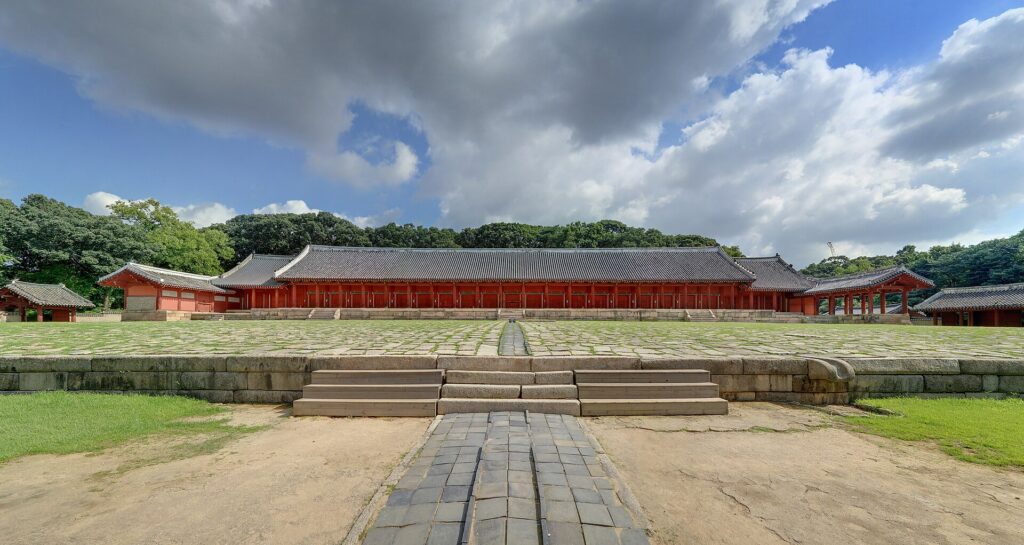
At Jongmyo, arriving during opening hours does not always mean you can enter immediately and wander independently. The first planning decision is the entry format for your date. The second is what you expect to see: this is a royal ancestral shrine, not another collection of palace living quarters.
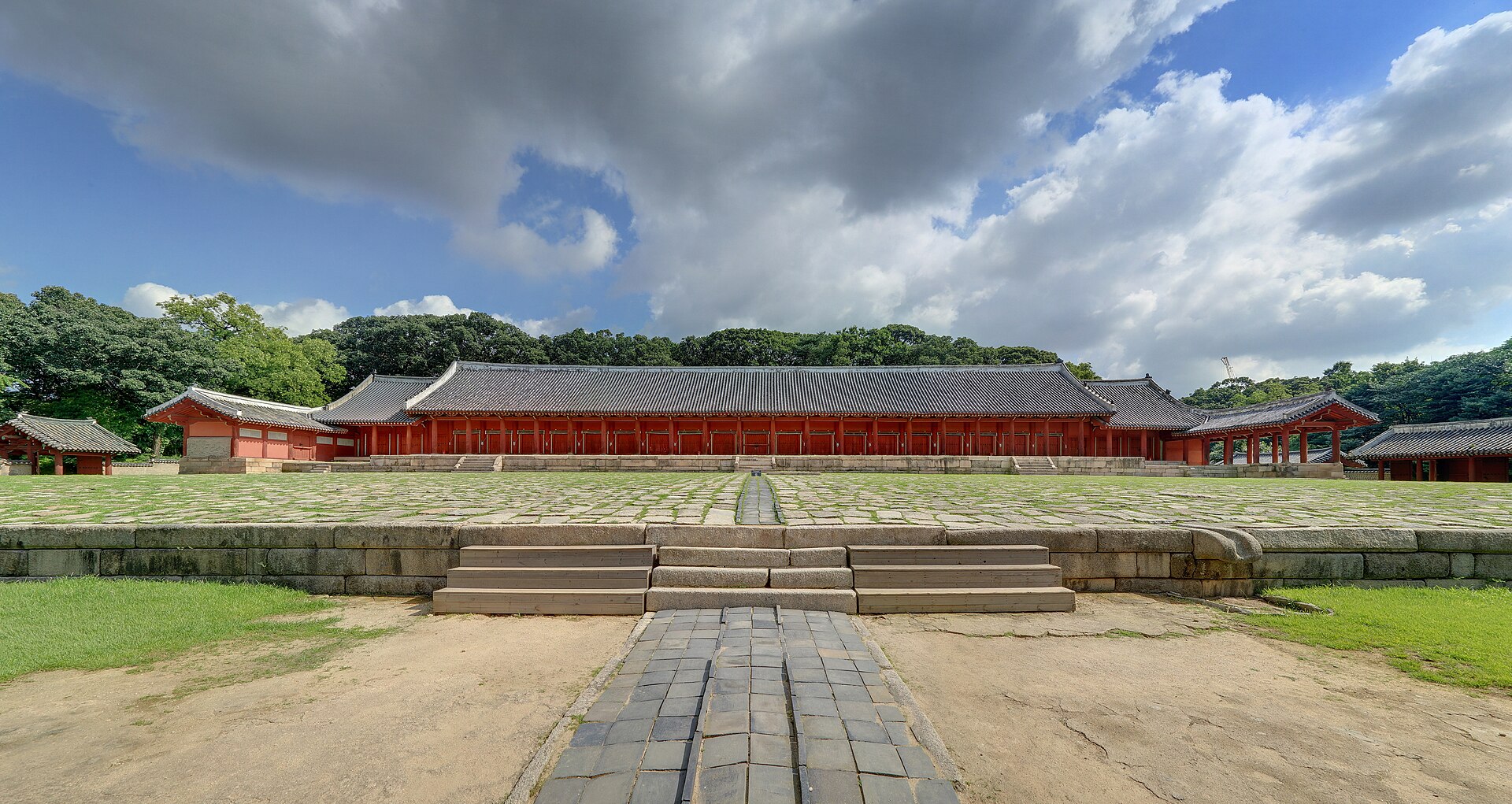
Check the entry format before choosing a lunch reservation
The current Royal Palaces and Tombs Center timetable distinguishes timed visits on Monday, Thursday and Friday from general admission on Saturdays, Sundays, public holidays and Wednesdays. Tuesday is the usual closing day, with holiday exceptions. Older descriptions of a single free-entry Wednesday each month should not replace the current calendar.
On a timed day, choose the language and session before arranging the rest of your morning. The published English schedule includes 10:00, 12:00, 14:00 and 16:00 sessions, but confirm the particular date and availability. Arriving at the gate exactly when the session begins leaves no margin for ticketing or finding the meeting point.
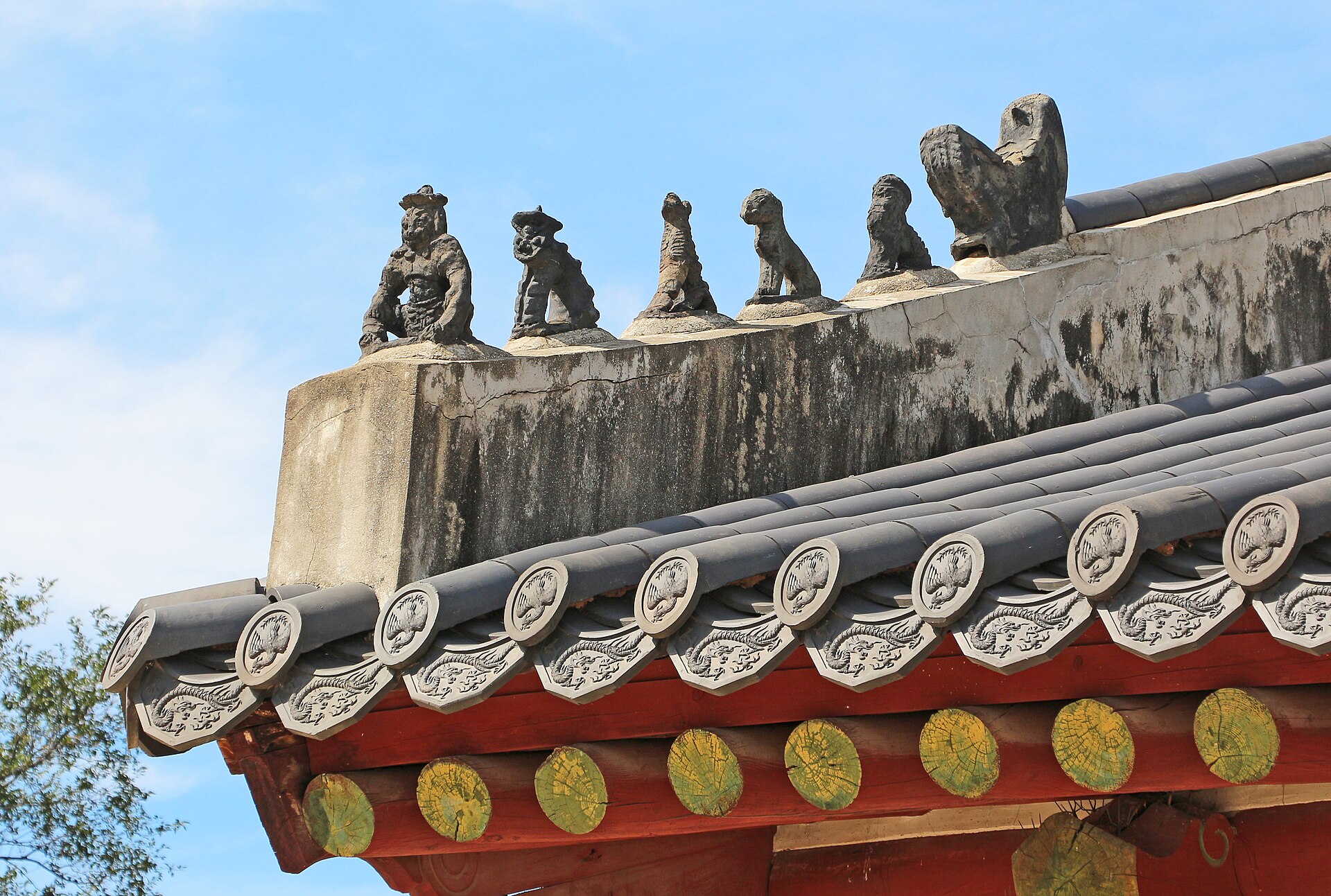
Read the long building before concentrating on one detail
The repeated doors and columns of Jeongjeon create a different viewing experience from a richly furnished interior. From an allowed viewing position, first take in the length of the building and the space in front of it. Then move your attention to a roof detail or one repeated element. The change of scale gives the visit a useful structure.
Separate observation from explanation. You can see repetition for yourself; understanding how the building relates to the ancestral rites needs the interpretation panel or guide. That distinction prevents a photograph from becoming an invented account of what happened behind every door. A short visit can still be attentive without pretending to cover the entire ritual tradition.
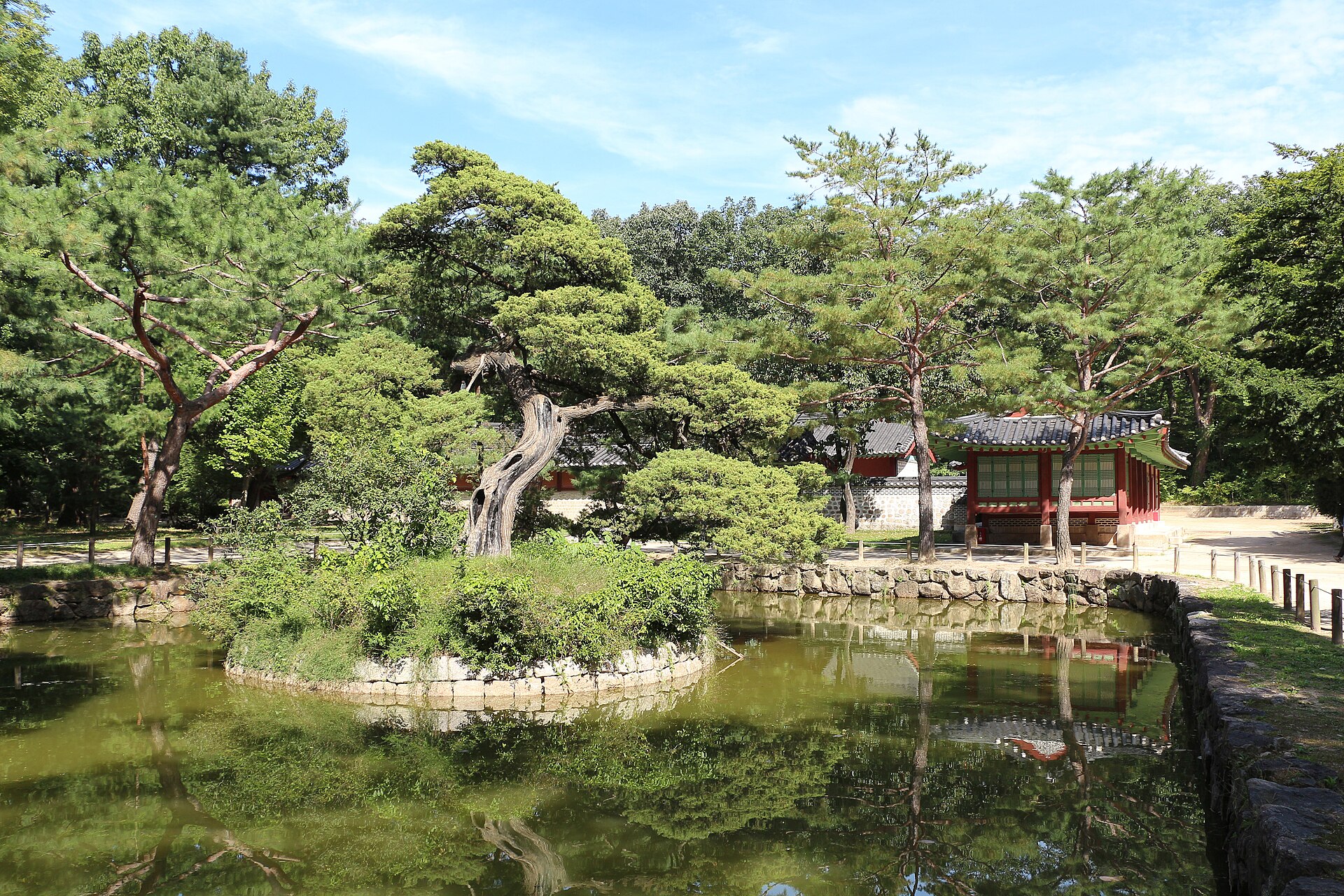
Treat the paths as part of the site
Read the ground markings and access signs before taking what appears to be the easiest shortcut. An open-looking stretch is not necessarily the visitor route. During a guided session, notice where the group stops and how the guide connects one space to another instead of treating every interval as empty walking time.
The landscape provides a quieter change of scale between buildings. The pond photograph here is an archival view, not a promise of particular foliage or water conditions. If seasonal colour is your main reason for visiting, check current conditions separately rather than using an older photograph as a forecast.
Do not mistake a ceremony photograph for the daily programme
Images of royal ancestral rites or ritual music can set an expectation that a performance comes with ordinary admission. It does not follow that a ceremony will take place on your date. If seeing a particular event is essential, verify its name, date and booking arrangements separately from the shrine opening hours.
For an ordinary visit, a realistic goal is to connect the architecture, movement through the grounds and the explanation of the rites. Write your chosen date, entry format and language together in your itinerary. Then place lunch and the rest of your Jongno walk around that decision rather than sacrificing the visit to an inflexible restaurant booking.
Before you go
Address: 157 Jongno, Jongno-gu. Confirm the date-specific admission format and language session on the official timetable. Tuesday is the usual closure, subject to holiday arrangements.
Checked against official information on September 29, 2026. This is a researched planning guide, not a first-person visit report. Recheck closures and access before departure.
Check the current visitor information before fixing your arrival time.