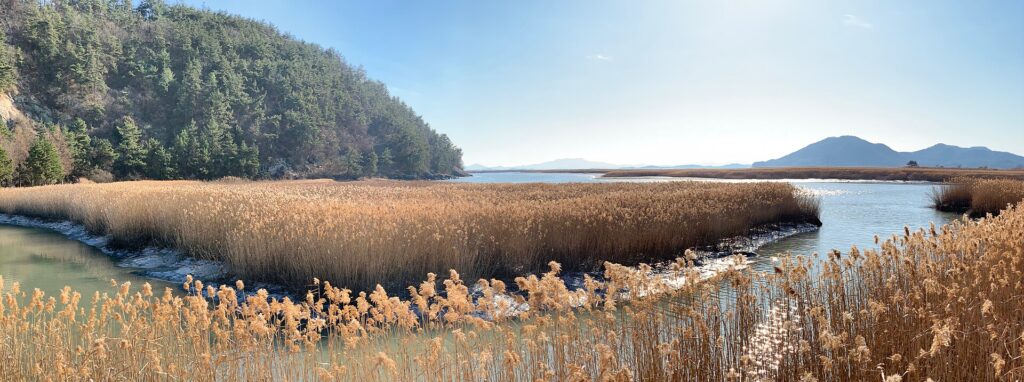
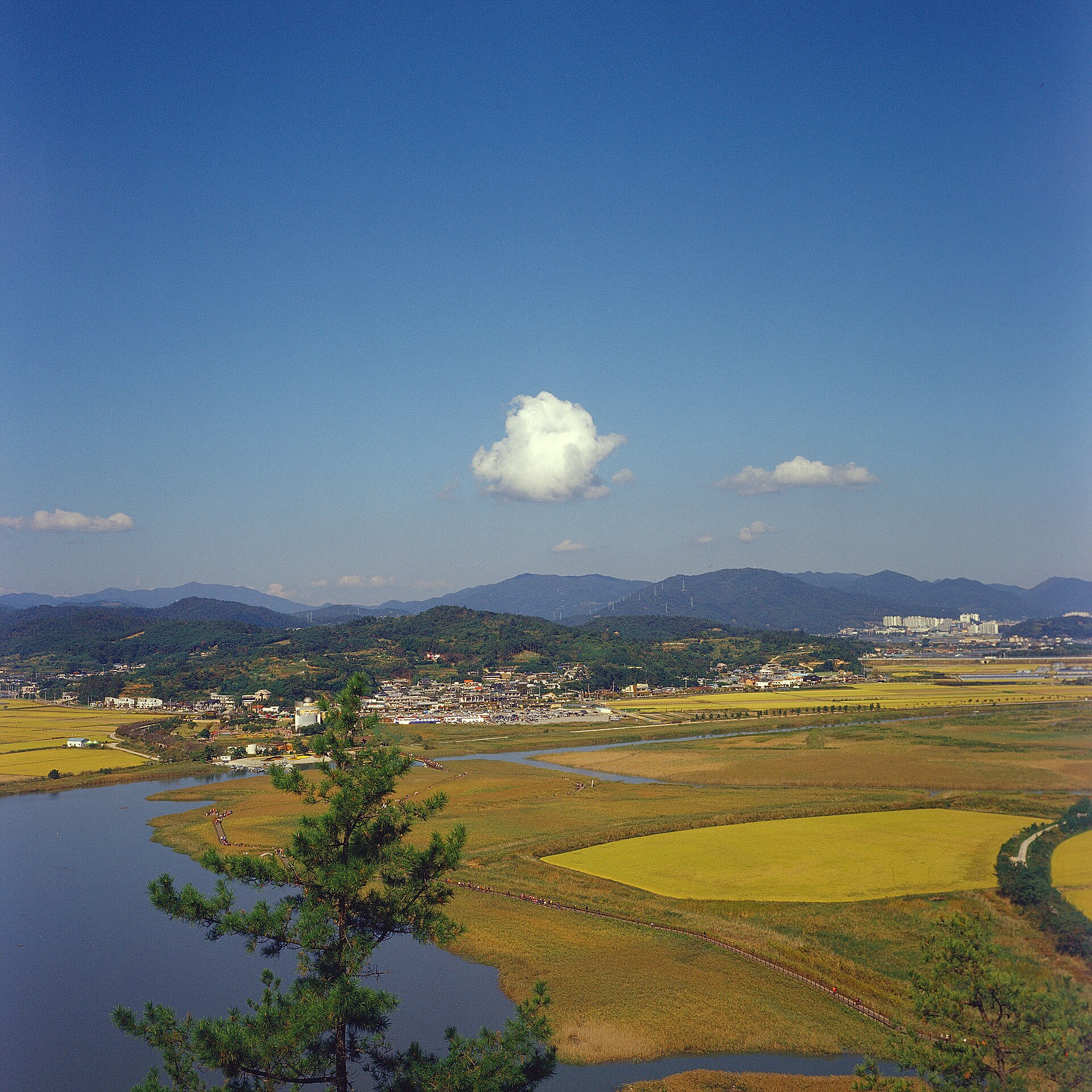
The familiar aerial-looking view of Suncheon Bay can create a misleading expectation: that the sweeping S-shaped channel is waiting just inside the ticket gate. The experience at reed level is much more enclosed. Both are worth your time, but they are different walks. Decide whether you want an easy-paced encounter with the wetland or a longer route that adds the Yongsan viewpoint before you start.
The lower walk is a complete visit
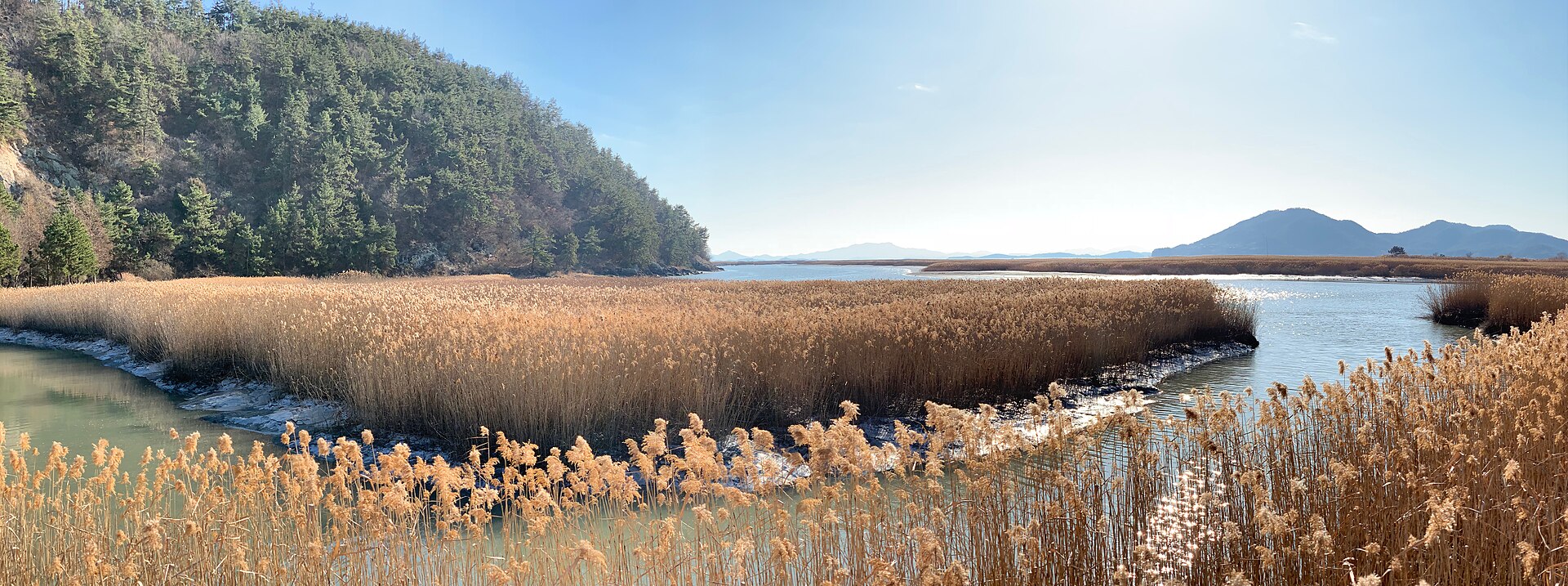
The wetland’s suggested walking routes list a one-hour, three-kilometer round trip through the reed trail and a longer two-hour course including Yongsan Observatory. Treat those as planning estimates, not a stopwatch challenge. Pauses to watch the water, read an exhibit or let other walkers pass all belong in the visit.
On the lower route, the useful details are close: reeds screen off distant buildings, narrow channels break up the vegetation, and the texture of the mud contrasts with the stems. You do not need to reach a high viewpoint to notice these. If your group has mixed energy levels, a shared lower walk is often a better experience than turning the final hill into an obligation.
Why the reeds form islands, not a planted garden
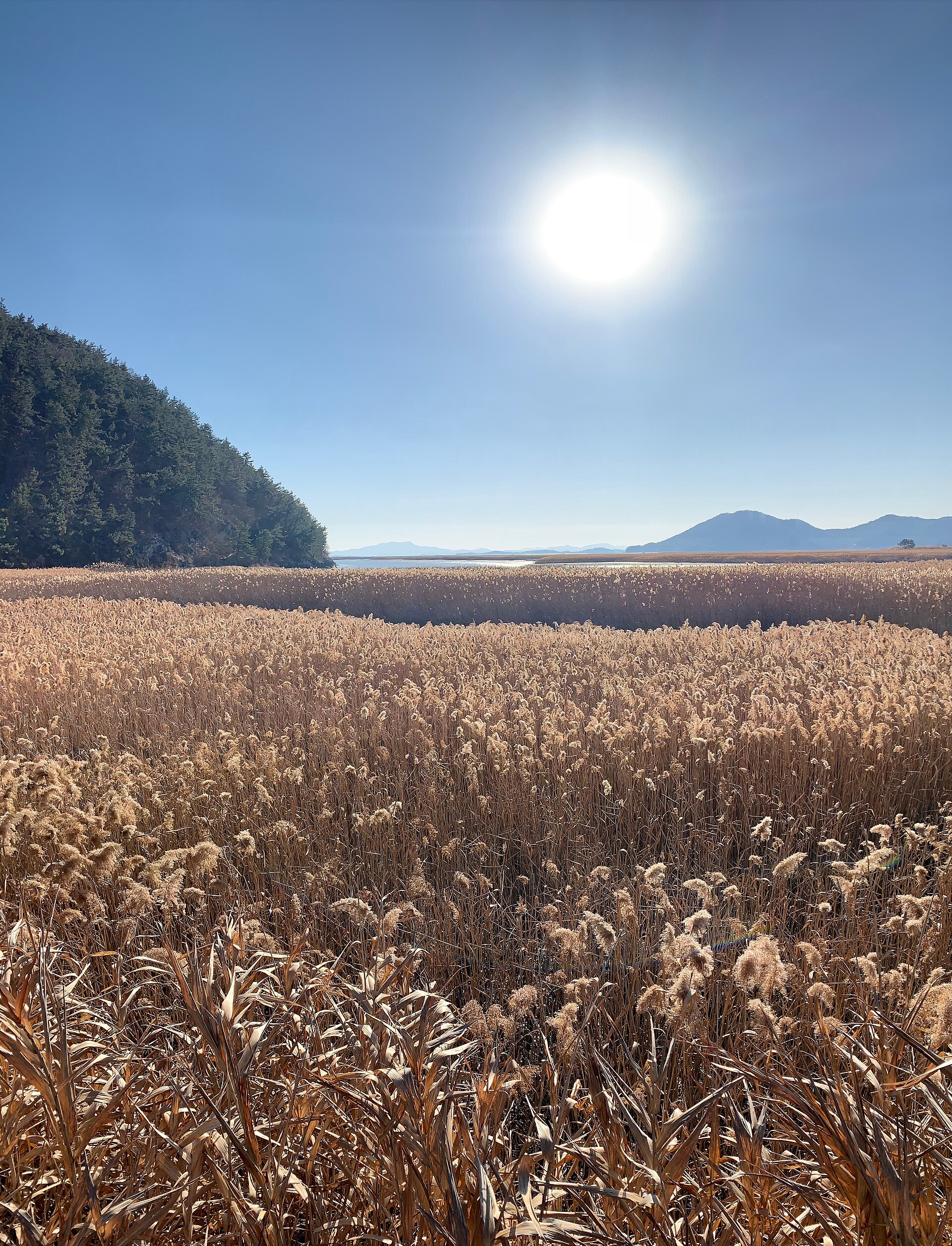
The reserve’s explanation of its reed beds describes growth spreading through roots and shoots as sediment builds and suitable ground develops. The rounded patches visible from above are therefore something to read as wetland processes, rather than ornamental beds laid out for a park.
At eye level, notice where dense stems give way to open water. From above, compare the outlines of several patches. This gives the two routes a connection: the hill is not simply the place for a better selfie, but a way to understand patterns you have already walked beside. Stay on the designated paths and leave the vegetation and wildlife undisturbed.
The viewpoint adds a climb and a return journey
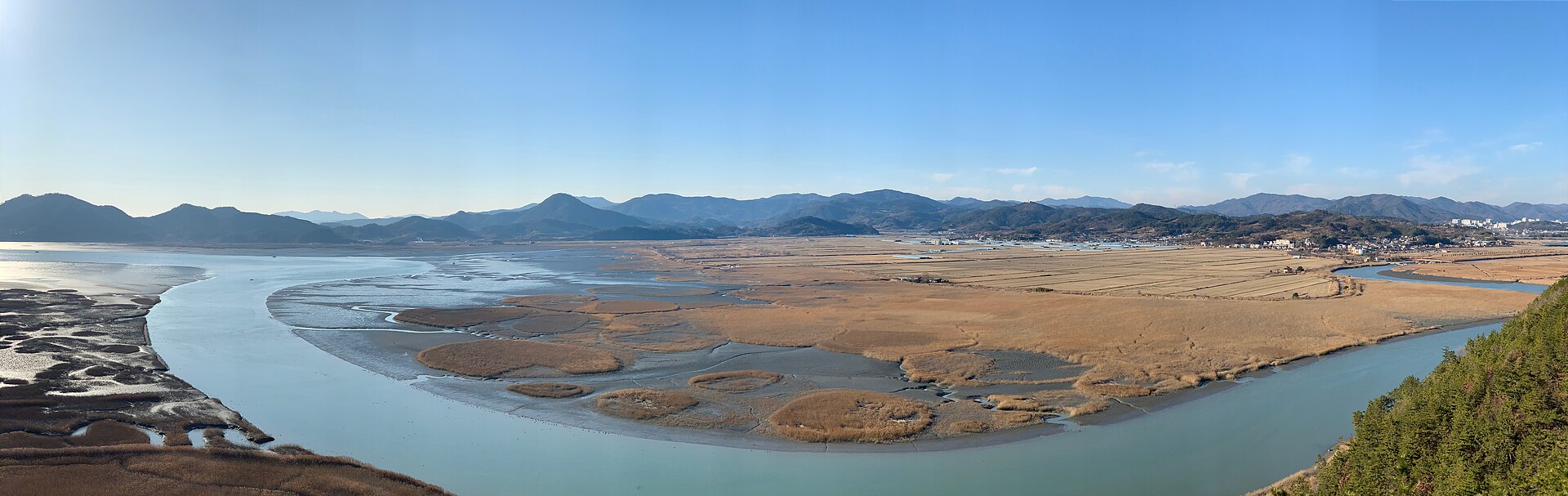
The official Yongsan Observatory information describes about thirty minutes from the entrance to Yongsan. That is not thirty minutes from the reserve’s main ticket gate. It also records a replacement wooden observation structure completed in July 2025, so older photographs of the platform should not be used as a current access diagram.
Leave room in the plan for the walk back through the wetland. The visitor rules warn that the walking trail has no lighting. Sunset photography therefore involves a return in fading light, not a leisurely stroll through an illuminated city park. For a first visit, an earlier viewpoint stop is the simpler option. If conditions are wet, visibility poor or the group tired, turn around without treating the missing panorama as a failed day.
One ticket does not put the garden next door
The standard admission information lists 10,000 won for adults and says the same-day ticket covers both Suncheon Bay Wetland and the National Garden, around seven kilometers apart. Keep the ticket. The shared admission is a financial convenience; it does not remove the transfer or the walking time at either destination.
For an October visit, the seasonal hours show entry from 08:00 to 18:00 and sightseeing allowed for one further hour. An 18:00 arrival is not a sensible starting point for the advertised two-hour walk. If the garden occupies your morning, protect a substantial afternoon block for the wetland instead of squeezing it into the last admission window.
A useful packing choice is simple: comfortable walking shoes and a plan suited to daylight, weather and the people with you. Save the reserve’s map before setting out. Use the lower trail for close observation, add the viewpoint when time and energy allow, and let the wetland—not a race between attractions—set the pace.